
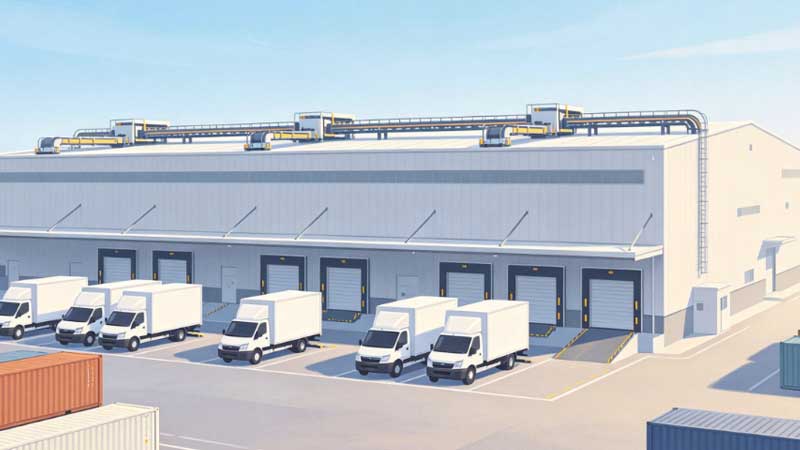
Cross‑border e‑commerce sellers in China have gained access to a significant logistics advantage in 2026. The General Administration of Customs (GAC) and the Ministry of Commerce (MOFCOM) have officially opened a new round of bonded warehouse zones specifically designated for cross‑border e‑commerce (CBEC) operations. These new zones, located in 12 additional pilot cities, expand the “bonded import” (1210) model and introduce enhanced incentives for overseas warehouse pre‑positioning, tax deferral, and simplified customs clearance. For foreign sellers, brand owners, and logistics providers, understanding these new bonded warehouse zones is essential to reduce inventory costs, improve delivery speed, and optimize cross‑border supply chains. This guide provides a complete overview of the 2026 bonded warehouse zone expansion, the operational benefits, and a practical roadmap for qualifying enterprises.
📑 What You'll Learn
- 12 new pilot cities with bonded warehouse zones for CBEC (2026 expansion)
- The 1210 bonded import model – how it works and key benefits
- Tax deferral advantages: deferred customs duties, VAT, and consumption tax
- Simplified customs clearance and “goods pre‑positioning” for faster delivery
- Eligibility requirements for overseas sellers and domestic agents
- Returned goods processing and inventory management within bonded zones
- Practical compliance roadmap for cross‑border e‑commerce enterprises
1. 12 New Pilot Cities with Bonded Warehouse Zones for CBEC (2026 Expansion)
In early 2026, the State Council approved the expansion of cross‑border e‑commerce bonded import pilot zones to 12 additional cities, bringing the total number of comprehensive pilot zones to over 100. The newly added cities include secondary logistics hubs such as Ningbo (expansion), Qingdao (expansion), Urumqi, Lanzhou, Guiyang, Nanning, and others. These new bonded warehouse zones are strategically located near major consumer markets and transportation corridors, enabling faster last‑mile delivery and lower warehousing costs.
Each new bonded zone is equipped with dedicated customs supervision facilities, integrated logistics parks, and digital connectivity to the China International Trade Single Window. Enterprises can now establish bonded warehouses in these zones to store imported goods before they are sold to domestic consumers. The expansion significantly reduces the geographic barriers that previously limited bonded import operations to coastal cities only.
2. The 1210 Bonded Import Model – How It Works and Key Benefits
The bonded warehouse model for cross‑border e‑commerce is formally designated as customs supervision code 1210 (保税跨境贸易电子商务). Under this model, overseas sellers or their domestic agents may import goods into a bonded warehouse in China without immediately paying customs duties, value‑added tax (VAT), or consumption tax. Goods are stored in the bonded zone until they are sold to domestic consumers through registered e‑commerce platforms (e.g., Tmall Global, JD Worldwide, Kaola).
When a consumer places an order, the goods are released from the bonded warehouse, customs clearance is processed electronically, and the applicable taxes are collected from the consumer at checkout (typically a simplified composite tax rate). The seller does not need to prepay duties on unsold inventory, significantly improving cash flow. For products with high demand volatility, the 1210 model allows sellers to adjust inventory based on real‑time sales data rather than committing to large imported batches with upfront tax payments.
Key benefits of the 1210 model include:
- Tax deferral: Duties, VAT, and consumption taxes are only payable at the time of sale, not upon importation.
- Faster delivery: Goods are already in China, enabling 2‑3 day delivery to most consumers (compared to 7‑15 days for direct cross‑border shipping).
- Simplified returns: Returned goods can be processed within the bonded zone, reducing cross‑border logistics costs.
- Lower inventory risk: Unsold goods can be re‑exported or destroyed without paying taxes.
3. Tax Deferral Advantages: Deferred Customs Duties, VAT, and Consumption Tax
The most significant financial benefit of the bonded warehouse model is the deferral of customs duties, VAT, and consumption tax until the point of sale. For a typical consumer goods import shipment valued at RMB 1 million, the upfront tax liability could be RMB 200,000‑300,000 depending on the product category. Under the 1210 model, that tax payment is postponed until each individual item is sold, which can be weeks or months later. This cash flow advantage is particularly valuable for seasonal products, new brand launches, and test‑and‑learn inventory strategies.
The tax rate applied at the point of sale is the simplified cross‑border e‑commerce retail import tax (跨境电商综合税), which is generally lower than standard import duty + VAT rates. For most consumer goods, the effective tax rate is 9.1% (including consumption tax for applicable categories) or a lower rate for products subject to special preferential policies. The seller does not need to engage in complex duty drawback procedures – the tax is collected automatically by the e‑commerce platform or customs system at checkout.
It is important to note that the tax deferral applies only to goods sold through registered cross‑border e‑commerce platforms. Goods that are transferred out of the bonded zone for other purposes (e.g., wholesale distribution, off‑line retail) are subject to standard import duty and VAT at the time of transfer.
4. Simplified Customs Clearance and “Goods Pre‑positioning” for Faster Delivery
The bonded warehouse model significantly streamlines customs clearance for cross‑border e‑commerce orders. When a consumer places an order, the e‑commerce platform transmits the order information, payment confirmation, and logistics data to the customs system through the Single Window. Customs performs an automated risk assessment and, if no red flags are raised, issues an electronic release instruction within seconds. The goods are then picked, packed, and shipped from the bonded warehouse directly to the consumer – often within 24‑48 hours of the order being placed.
This process, known as “goods pre‑positioning,” eliminates the need for each individual package to be cleared at the port of entry. The entire supply chain becomes more predictable, and delivery times are reduced from 7‑15 days (direct cross‑border shipping) to 2‑3 days. For sellers competing on customer experience, this can be a decisive advantage.
Customs has also introduced a “tiered inspection” system for bonded warehouse shipments. Enterprises with a high credit rating (A or B) and a clean compliance record are eligible for reduced inspection rates (as low as 0.5% of shipments), further accelerating clearance. Lower‑rated enterprises face higher inspection rates (up to 5‑10%).
5. Eligibility Requirements for Overseas Sellers and Domestic Agents
To utilize the new bonded warehouse zones for cross‑border e‑commerce, sellers must meet specific eligibility criteria:
- Enterprise registration: The seller (or its domestic agent) must have a valid business license in China and complete the cross‑border e‑commerce enterprise filing through the Single Window.
- E‑commerce platform integration: The seller must be registered on a recognized cross‑border e‑commerce platform (e.g., Tmall Global, JD Worldwide, Kaola, VIPShop) that has an interface with the customs system.
- Product compliance: Imported goods must comply with China‘s product safety, labeling, and quality standards. Prohibited items (e.g., certain food supplements, unapproved cosmetics) cannot be stored in bonded warehouses.
- Personal use limit: The 1210 model is intended for personal consumption goods. The annual purchase limit per consumer is RMB 26,000, and the single transaction limit is RMB 5,000. Higher‑value goods must use other import channels.
- Credit rating: The seller (or agent) must have a customs credit rating of “general” or higher and a tax credit rating of A or B to qualify for the most favorable inspection rates.
Overseas sellers without a Chinese legal entity must appoint a domestic agent. The agent must have its own customs registration and will be jointly liable for compliance, including tax obligations and product safety.
6. Returned Goods Processing and Inventory Management Within Bonded Zones
One of the operational advantages of the bonded warehouse model is the simplified handling of returned goods. When a consumer returns a product purchased through the 1210 channel, the returned item can be sent back to the bonded warehouse without having to clear export customs. The returned goods are placed back into inventory and can be resold to another consumer (subject to quality inspection).
The customs rules for returned goods under 1210 are straightforward: if the return occurs within 30 days of the original sale, the seller can apply for a refund of the taxes already paid on that item. The refund process is automated through the Single Window, and the tax amount is credited to the seller‘s account or offset against future tax liabilities. Returned goods that cannot be resold (e.g., damaged, expired) may be destroyed within the bonded zone under customs supervision, with no additional tax liability. This reduces the financial risk of returns compared to direct cross‑border shipping, where returned goods often must be abandoned or shipped back overseas at high cost.
For inventory management, bonded warehouse operators provide digital dashboards that allow sellers to track stock levels, expiration dates (for products with shelf life), and turnover rates. Sellers can replenish stock through regular import shipments or airfreight as needed. Unsold goods can be transferred to another bonded zone, re‑exported, or sold to domestic duty‑paying channels after paying the applicable taxes.
7. Practical Compliance Roadmap for Cross‑Border E‑Commerce Enterprises
To take advantage of the new bonded warehouse zones opened in 2026, overseas sellers and domestic agents should follow this six‑step roadmap:
- Determine eligibility and select a bonded zone (Immediate): Review the list of pilot cities and choose a bonded warehouse zone that offers favorable logistics connections to your target consumer regions. For consumer goods concentrated in the Yangtze River Delta, Ningbo or Shanghai FTZ zones are optimal; for western regions, consider the new Urumqi or Xi‘an zones.
- Complete enterprise filing through Single Window (Month 1): Ensure your domestic agent (or your own WFOE) has completed cross‑border e‑commerce enterprise filing. Select the 1210 business type. Obtain the necessary customs code and e‑port card.
- Integrate with an approved e‑commerce platform (Month 1‑2): Establish a storefront on a platform that supports the 1210 bonded model. Complete the platform’s technical integration for order data transmission to customs.
- Sign a warehousing agreement with a bonded zone operator (Month 2): Choose a licensed warehouse operator within the selected bonded zone. Verify that the operator has the necessary customs supervision equipment and digital interface. Negotiate storage fees, picking & packing rates, and return processing fees.
- Ship initial inventory to the bonded warehouse (Month 3): Arrange for the import of your products into the bonded zone. Use the 1210 customs declaration (code 1210) at the port of entry. Provide the warehouse operator with product descriptions, HS codes, and declared values. No duty payment is required at this stage.
- Launch sales and manage ongoing compliance (Ongoing): Activate your product listings on the e‑commerce platform. Monitor sales and replenish inventory as needed. Ensure that all consumer orders are matched with electronic data transmission (order, payment, logistics). Maintain accurate inventory records and handle returns according to bonded zone procedures. File periodic reports with customs as required (typically monthly or quarterly).
The total setup time from filing to first shipment is typically 2‑4 months, depending on the efficiency of the platform integration and warehouse onboarding. Sellers with existing WFOEs and customs registrations may complete the process faster.
Summary: The 2026 expansion of bonded warehouse zones for cross‑border e‑commerce adds 12 new pilot cities, significantly expanding the reach of the 1210 bonded import model. Key benefits include tax deferral (no upfront duties, VAT, or consumption tax), faster 2‑3 day delivery to consumers, simplified customs clearance with reduced inspection rates for high‑credit enterprises, and streamlined returns processing. Overseas sellers must complete enterprise filing through the Single Window, integrate with approved e‑commerce platforms, and partner with licensed bonded warehouse operators. The 1210 model is available for personal use goods under RMB 26,000 annual consumer limit. By leveraging these new bonded zones, cross‑border e‑commerce sellers can reduce working capital requirements, improve customer satisfaction through faster delivery, and gain a competitive edge in China‘s booming imported consumer goods market.