
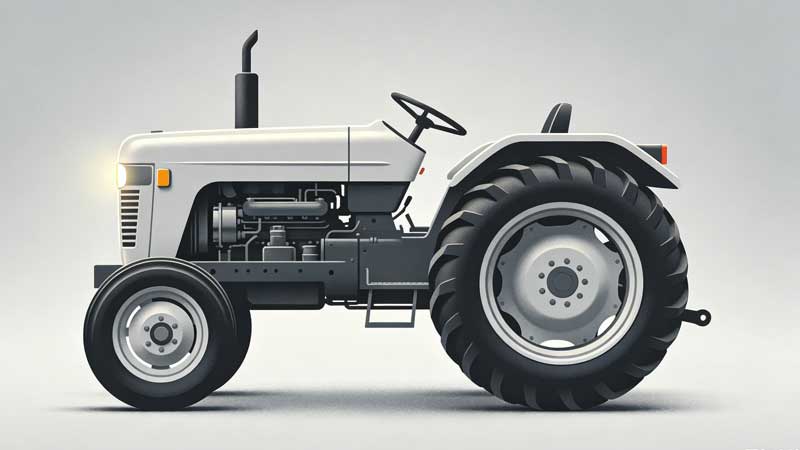
The 2026 mandatory CCC certification catalog, officially maintained by the Certification and Accreditation Administration (CNCA), has expanded its coverage of agricultural machinery, effectively broadening the scope of products subject to CCC mandatory certification. According to the 2026 edition of the CCC catalog and the updated product description and delimitation list, agricultural machinery (Category 14) has been refined from the previous two subcategories to cover a significantly broader range of core farm machinery. Products newly classified under the mandatory certification framework include tractors, combine harvesters, threshers, feed grinders, and plant protection machinery.
The most consequential change for foreign manufacturers and importers of farm machinery is the incorporation of GB 18447-2025 “Safety Technical Specifications for Tractors” as the mandatory certification standard for tractors under CCC. Published on June 30, 2025, and effective from July 1, 2026, this new safety standard directly replaces the 2008 version of four standards: GB 18447.1-2008 (safety requirements for wheeled tractors), GB 18447.2-2008 (walking tractors), GB 18447.3-2008 (crawler tractors), and GB 18447.4-2008 (belt‑driven wheeled tractors). Designed as a C‑class mandatory safety standard (machine‑specific safety requirements) under GB/T 15706, the new standard comprehensively refines tractor safety by establishing a structured framework covering eight core systems (steering, controls, PTO, hydraulics, fuel, electrical, exhaust), five protective devices (ROPS, FOPS, seat belts, shielding), and three risk management aspects (thermal hazards, noise, remaining risks). If its provisions differ from those of A‑class (basic safety) or B‑class (generic safety) standards, the tractor‑specific requirements of GB 18447-2025 take precedence.
1. 2026 CCC Catalog Expansion for Agricultural Machinery
China’s CCC certification catalog has historically undergone dynamic adjustments in line with product safety needs. Recent updates show that the scope of the catalog continues to expand, with new product categories such as energy storage systems, smart wearables, and wireless chargers being added. More importantly for agricultural machinery stakeholders, the 2026 edition of the CCC catalog has refined the “Agricultural Machinery” category (Category 14) to specifically include the following mandatory product subcategories:
- Plant protection machinery (Category 1401): Includes knapsack sprayers, power‑driven sprayers, duster sprayers, and similar equipment.
- Wheeled tractors (Category 1402): Primarily covers wheeled tractors, including belt‑driven and direct‑drive configurations, with tractors being the core focus of the new GB 18447-2025 safety standard. Tractors are defined as self‑propelled machines used for agricultural traction and power take‑off operations, with safety certification covering a wide range of specifications.
- Combine harvesters: Self‑propelled grain harvesting machinery, including wheeled and tracked configurations, now falls under mandatory certification following the 2026 catalog update.
- Threshers: Stationary threshing equipment (e.g., wheat, rice threshers) must now meet CCC certification requirements.
- Feed grinders: Machinery used for processing animal feed into smaller particles or grinding roughage, such as hammer mills and cutting mills, now requires CCC certification before market entry.
This expansion aligns with the 2025 catalog updates, which also added protective materials for building insulation, adult electric bicycles, helmets for electric bicycle riders, and child smartwatches. However, the agricultural machinery addition is unique in that it establishes a complete safety framework through the new GB 18447-2025 standard rather than simply expanding the product list. Additionally, the export and import of agricultural machinery require not only CCC certification but also adherence to “Rules for the Implementation of Compulsory Product Certification: Agricultural Machinery Products (CNCA-C14-01:2014).” The CNCA-C14-01 framework, which predates the 2026 updates, governs product sampling, factory inspections, and ongoing compliance verification across all agricultural machinery categories. The 2026 catalog expansion works within this existing implementation rule, meaning manufacturers must align new product entries with the testing and factory inspection protocols already defined under CNCA-C14-01. The updated catalog also introduces new designation numbers: for wheeled tractors above 130 kW (category 1402), for driven belt‑driven walk tractors, and for stationary threshers.
2. GB 18447-2025: The New Mandatory Safety Standard for Tractors
GB 18447-2025 “Safety Technical Specifications for Tractors” marks a landmark consolidation of tractor safety requirements. Published on June 30, 2025, it will take mandatory effect on July 1, 2026. The most significant structural change is the integration of the previous four safety standards—covering wheeled tractors, walking tractors, crawler tractors, and belt‑driven wheeled tractors—into a single unified standard. However, the transformation goes far beyond consolidation. GB 18447-2025 has been completely reorganized into a multi‑tier framework covering three major categories: eight core system safety requirements, five protection devices, and three risk management aspects.
Core System Safety Requirements (8 systems): Steering (steering precision and returnability), controls (linkage and brake safety), power take‑off (PTO) (guarding and interlock safety), hydraulic systems (hose and joint integrity), fuel systems (leak prevention and flame arresters), electrical systems (new safety provisions for battery‑powered electric tractors, including insulation resistance and high‑voltage protection), exhaust systems (positioning and heat shielding to prevent fires), and electronic control systems (functional safety for autonomous and driver‑assist tractors).
Protection Devices (5 categories): ROPS (Roll‑Over Protective Structures), FOPS (Falling Object Protective Structures), seat belts (required for tractors with ROPS), shielding (for PTO shafts, belts, chains, and intake/exhaust components), and an emergency stop device (on tractors with remote engine shutdown capability).
Risk Management Aspects (3 categories): Thermal hazard management (surface temperature limits for operator‑accessible components), noise risk (worker safety limits and hearing protection recommendations), and remaining risk disclosure (requirements for comprehensive operator manuals covering residual hazards and safe operating instructions).
With the mandatory implementation date of July 1, 2026, approaching, a transition period is already in effect. For existing CCC certificate holders, all certificates issued under the old 2008 standards must be updated to GB 18447-2025 by July 1, 2026. Certificates not converted by this deadline will be suspended, and any certificates still outstanding by October 1, 2026, will be revoked. Failure to convert will render the affected tractors ineligible for sale or import after July 1, 2026.
3. New Standards for Combine Harvesters, Threshers, and Feed Grinders
While GB 18447-2025 focuses specifically on tractors, the 2026 catalog expansion for other agricultural machinery categories (combine harvesters, threshers, and feed grinders) references existing standards rather than introducing new ones. However, enforcement protocols are being intensified, and manufacturers must still meet the following base safety and operational criteria:
- Combine harvesters: Certification to GB 10395.7 (Safety of agricultural machinery – Combine harvesters) and GB 19997 (noise limits). New models must also comply with the Engine Exhaust Emission Standard for Non‑Road Mobile Machinery (China Stage IV), effective since 2022, which applies to all new diesel‑powered agricultural machinery imports.
- Threshers: Certification under GB 10395.3 (Safety of agricultural machinery – Threshers and grain cleaning equipment). The standard mandates that moving parts such as threshing drums and beaters be equipped with guards or interlocks, with labeling requirements in Chinese. Certification also covers electrical safety for motorized threshers under GB 4706.
- Feed grinders: Certification requires compliance with GB 10395.14 (Safety of agricultural machinery – Feed processing machinery) and GB 5226.1 for electrical safety. Safety provisions include emergency stop buttons, rotor speed monitors, and dust explosion prevention measures (for grinding combustible materials such as grain).
For all three product categories, the CCC certification process under CNCA-C14-01 requires documented quality control systems, factory inspection, and annual follow‑up surveillance. Product samples must undergo third‑party testing for structural integrity, protective guard effectiveness, noise emissions, and exhaust pollutant levels, all of which must be validated by a CNAS‑accredited facility before a CCC certificate can be issued.
4. Renewed Certification Rules Under CNCA-C14-01
In addition to the expanded product categories and the new safety standard for tractors, the CCC agricultural machinery implementation framework under CNCA-C14-01:2014 “Implementation Rules for Compulsory Product Certification – Agricultural Machinery Products” has been reinforced, with tighter compliance protocols now in place. Key updates affecting foreign manufacturers include:
- On‑site factory inspection (category‑based requirements): For manufacturing facilities producing CCC‑certified combine harvesters, threshers, and feed grinders (medium/high‑risk categories), CNCA has significantly reduced the acceptance of remote auditing for initial certification. Physical on‑site inspection is now required in most cases, with higher travel costs and longer lead times.
- Renewal of critical safety components: The CCC “List of Critical Safety Components and Consistency Checklist for Agricultural Machinery Products” has been expanded. For tractors, key components requiring strict traceability now include brake lines, ROPS structures, seat belt anchor points, and, for electric tractors, high‑voltage battery packs and insulation monitoring systems. For combine harvesters, tracked drive components and fire suppression systems must be verified.
- Annual follow‑up inspection (no waiver): For all CCC‑certified agricultural machinery products, the mandatory annual follow‑up factory inspection cannot be waived. This aligns with the 2024 tightening of CCC policies for high‑risk product categories (power tools, automotive safety components, etc.).
- Mandatory Chinese labeling: The product nameplate on all imported agricultural machinery covered by the CCC catalog must display, in simplified Chinese, the product name, manufacturer name (foreign), CCC certification number, country of origin, rated power (for tractors/combines), total mass, and safety warnings (e.g., “Do not operate without ROPS”). Labels are subject to verification during customs inspection; non‑compliant labels will result in rejection. Combine harvesters must also display the Grain Tank Capacity Label (in liters) and the required warning for open conveyors.
- Nameplate placement: For tractors and combine harvesters, the CCC mark must be affixed to a visible, accessible, and durable location on the chassis, not on removable panels or components. The mark must be either engraved, embossed, or applied with a tamper‑evident sticker that withstands outdoor exposure (UV resistance, oil/water resistance).
These renewed rules will be fully enforced by customs and market supervision authorities starting in 2026. Importers presenting certificates based on older interpretations (e.g., relying on remote audits for high‑risk machines) risk having their filings rejected.
5. Interaction with Other 2026 Agricultural Machinery Regulatory Changes
The 2026 CCC catalog expansion for agricultural machinery does not operate in isolation. Several other regulatory changes that took effect in 2026 significantly impact how tractors, combine harvesters, and threshers are imported and certified:
- GB 18447-2025 as the exclusive tractor safety standard (July 1, 2026): As detailed above, this new mandatory safety standard replaces the four 2008 versions. It introduces new requirements for electric and autonomous tractors that were previously absent, including battery safety (insulation monitoring, thermal management) and functional safety of electronic control units for driver‑assist systems.
- Diesel engine emission standard (China Stage IV): All new diesel‑powered agricultural machinery imports must comply with the emission limits for non‑road mobile machinery (China Stage IV). Certification must be demonstrated through engine test reports or manufacturer declarations, with the engine model listed in the CCC filing documentation.
- China “Three Guarantees” Regulation for Agricultural Machinery (2026 revision): The revised “Regulation on the Responsibility for Repair, Replacement, and Return of Agricultural Machinery Products” imposes stricter obligations on importers and manufacturers regarding product warranty periods, repair response times, and parts availability. Failure to comply may result in administrative penalties and product recalls.
6. Compliance Roadmap for Agricultural Machinery Importers (2026)
To ensure seamless customs clearance and maintain market access for tractors, combine harvesters, threshers, and feed grinders, foreign manufacturers and importers should follow this five‑phase compliance plan:
- Product classification review (Immediate): Verify whether your product falls under the expanded CCC catalog. Review the current CCC Agricultural Machinery Product List (14th category) to confirm if your product is classified as a wheeled tractor (1402), combine harvester, thresher, or feed grinder. If your tractor is a small (≤130 kW) or belt‑driven walk type, note the specific subcategory designations and applicable safety standards.
- GB 18447-2025 compliance testing (Months 1-3): Engage a CNAS‑accredited testing laboratory to perform full safety certification testing under GB 18447-2025 for tractors, or the corresponding standards (GB 10395 series) for harvesters and threshers. Ensure that the test report references the 2025 standard number, not the old 2008 standards. For tractors using the new standard, the certificate will be reissued by the certification body, and the certification will remain valid for five years, subject to annual inspection.
- Factory inspection (new or converted certificates): For the first CCC certification of new product categories (combine harvester, thresher, feed grinder), schedule an on‑site factory inspection. The audit will focus on production line consistency, documentation of quality control processes (incoming material inspection, in‑process checks, final testing), and traceability of critical safety components, as defined in the “CCC List of Critical Safety Components.” Prepare by conducting internal audits using the CNCA-C14-01 checklist.
- CCC certificate conversion (tractors only – Months 2-4): If you currently hold a CCC certificate for tractors based on the old 2008 standards, you must apply to a designated certification body (e.g., CQC, CCAP, SAM) for a standard conversion. The conversion process requires submitting a GB 18447-2025 test report (based on selected tractor models – one belt‑drive and one direct‑drive unit). Once the report is accepted, the certification body will issue a new certificate. The certificate number and model identification will remain unchanged, but a supplementary factory inspection will be required within 90 days of the certificate conversion date.
- Labeling and documentation update (Month 4): After obtaining CCC certification, ensure that the product nameplate (in simplified Chinese) includes the mandatory CCC mark, manufacturer name, CCC certification number, country of origin, rated power (kW), safety warnings (e.g., “Do not operate without ROPS”), and, for combine harvesters, grain tank capacity. All information on the nameplate must match the declaration submitted during certification. Ensure that the operator’s manual is also in simplified Chinese, covering safe operating procedures, maintenance intervals, and emergency shutdown instructions.
Summary: The 2026 CCC catalog expands its “Agricultural Machinery” category (Category 14) to cover wheeled tractors, combine harvesters, threshers, and feed grinders, making CCC certification mandatory for all four product types. For tractors, the new mandatory safety standard GB 18447-2025, effective July 1, 2026, replaces the four 2008 standards with a comprehensive safety framework covering core systems, protective devices, and risk management. It also introduces new requirements for electric tractors, autonomous driving functions, and PTO safety. Importers of tractors must convert existing CCC certificates to the 2025 standard before July 1, 2026; failure to do so will result in certificate suspension and import bans. Combine harvesters, threshers, and feed grinders must comply with GB 10395 series standards and undergo CNAS‑accredited testing and on‑site factory inspections under CNCA-C14-01 rules. The expanded CCC catalog, combined with stricter enforcement of annual follow‑up inspections, diesel emission standards (China Stage IV), and mandatory Chinese labeling, means that foreign agricultural machinery manufacturers must take proactive steps now to secure certification and maintain uninterrupted market access.