
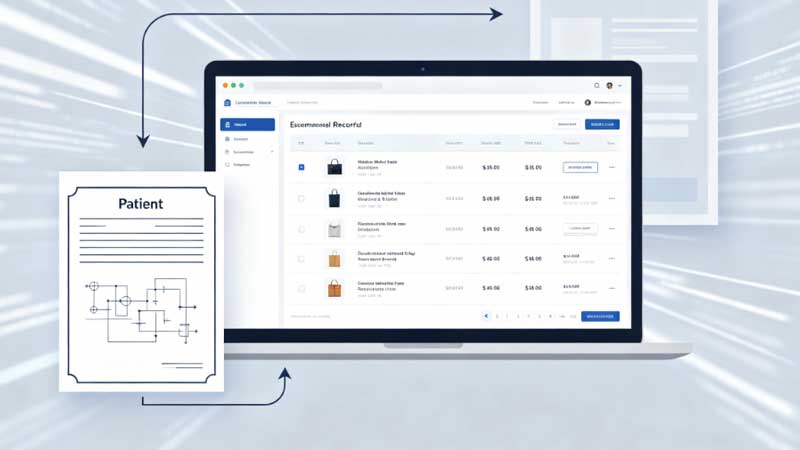
Prior art is the lifeblood of patent invalidation. But for years, practitioners searching for prior art to challenge Chinese patents have focused overwhelmingly on traditional sources: patent databases, academic journals, conference proceedings, and industry publications. A vast and increasingly important category of prior art has been systematically underutilized: e-commerce records. Every day, millions of products are listed, sold, and reviewed on platforms like Taobao, Tmall, JD.com, and Pinduoduo. Each transaction generates timestamped digital records—product listings with photographs and specifications, sales confirmations, buyer reviews with date stamps, shipping tracking information—that can establish public availability of a product before a patent's filing date. These e-commerce prior art records are particularly valuable for challenging utility model and design patents covering consumer products, where the patented product may have been sold online before the patent application was filed. This guide presents a detailed case study of a successful patent invalidation using Taobao sales records as prior art, explaining how the evidence was identified, collected, authenticated, and presented to CNIPA. It provides practical guidance for practitioners seeking to leverage online public use evidence in their own invalidation proceedings.
📑 What You'll Learn
- The legal basis for using e-commerce records as prior art in China
- Case study: invalidating a utility model using Taobao sales evidence
- How to search for and identify e-commerce prior art
- Authentication methods: notarization, platform verification, and digital forensics
- Building the evidentiary chain from online listing to public availability
- Presenting e-commerce prior art effectively in CNIPA proceedings
1. The Legal Basis: E-Commerce Records as Prior Art Under Chinese Patent Law
Chinese patent law recognizes several categories of prior art that can be used to challenge patent validity. The most commonly invoked categories are publications—documents that were publicly available anywhere in the world before the patent's filing date—and public use—products or processes that were publicly used or demonstrated in China before the filing date. E-commerce records can constitute prior art under either or both categories, depending on their content and how they are presented.
A product listing on Taobao that includes detailed photographs and technical specifications can constitute a publication if it was publicly accessible before the filing date. The listing is a document that discloses the product's design and technical features to any member of the public who views it. The publication date is established by the listing's creation date, the date of the first sale, or the date of the earliest customer review—whichever can be reliably authenticated. Under Chinese patent examination practice, online publications are treated equivalently to printed publications for prior art purposes, provided their publication date and public accessibility can be established.
A completed sale of a product through an e-commerce platform can constitute public use. The sale transfers the product from the seller to a buyer who is not bound by confidentiality obligations, making the product publicly available. The use is "public" because the buyer is a member of the public, and the sale transaction places the product in the public domain. The date of public use is established by the transaction date, which e-commerce platforms record with precision.
CNIPA's examination guidelines explicitly recognize that online evidence can constitute prior art, and the new invalidation guidelines have clarified the standards for authenticating and evaluating such evidence. The key requirements are that the evidence must establish what was disclosed, when it was publicly available, and that it was accessible to the public without confidentiality restrictions. Online public use evidence that satisfies these requirements carries the same evidentiary weight as traditional printed publications or physical public use evidence.
2. Case Study: Invalidating a Utility Model Using Taobao Sales Evidence
The case that illustrates the power of e-commerce prior art in patent invalidation involved a Chinese utility model patent covering a kitchen appliance component. The patentee had obtained the utility model registration in 2024 and had begun asserting it against competitors in the domestic kitchenware industry, sending cease-and-desist letters and filing infringement complaints on e-commerce platforms. The patent posed a significant commercial threat to several manufacturers who had been producing similar components for years.
The patent's claims were directed to a specific structural configuration of the appliance component—a arrangement of heating elements, control circuits, and safety features that the patentee claimed was novel and inventive. However, the manufacturers believed that products embodying the claimed configuration had been sold on Taobao well before the patent's filing date. The challenge was to find and authenticate evidence of those pre-filing sales.
The investigation focused on Taobao because the platform maintains detailed transaction records dating back years, including product listing pages with photographs and descriptions, buyer reviews with date stamps, and transaction confirmations. The search identified a Taobao store that had been selling kitchen appliance components since 2021. Several of the store's product listings, dating from early 2022—more than two years before the patent's filing date—showed products whose structural configuration matched the claimed features of the patent.
The critical evidence included a product listing created in March 2022 that displayed detailed photographs of the appliance component from multiple angles. The photographs clearly showed the structural arrangement of heating elements, the configuration of control circuits visible through the product's transparent housing, and the specific safety features recited in the patent's claims. The listing also included a technical specifications section describing the component's features in language that mapped directly onto the patent's claim elements. Customer reviews dating from April 2022 through December 2022 confirmed that the product had been sold and received by buyers during that period, with several reviews including user-uploaded photographs confirming the product's structure.
The evidence was authenticated through notarization conducted by a licensed notary public. The notary supervised the entire evidence collection process: navigating to the Taobao listing, capturing all listing content including photographs and specifications, documenting the customer review history with date stamps, and recording the transaction history showing sales dating from 2022. The notarial certificate established an unbroken chain of custody from the online content to the authenticated evidence package submitted to CNIPA.
CNIPA accepted the Taobao records as prior art establishing that the claimed structural configuration was publicly known and publicly available before the patent's filing date. The patent was invalidated in its entirety. The decision specifically noted that the e-commerce records, properly authenticated through notarization, constituted reliable evidence of pre-filing public availability and that the product photographs and specifications disclosed all the claimed features.
3. How to Search for and Identify E-Commerce Prior Art
Finding e-commerce prior art requires different search strategies than traditional patent and literature searching. E-commerce platforms are not designed as prior art repositories, and their search functionality is optimized for consumer purchasing rather than evidence discovery. Effective searching requires understanding platform data structures, persistence characteristics, and search limitations.
Platform selection should be guided by the product category and the relevant time period. Taobao and Tmall maintain extensive historical records and are particularly valuable for consumer products, electronics, housewares, and fashion items. JD.com provides detailed product specifications and maintains historical listing data. Pinduoduo's flash sale model means that individual listings may be ephemeral, but the platform's transaction records can still provide evidence of pre-filing sales. 1688.com, as a B2B wholesale platform, often contains listings with detailed technical specifications that are particularly valuable for industrial and component-level prior art. For each platform, understand the data retention policies and the types of historical information that remain accessible.
Search strategies should combine keyword searching with category browsing. Keyword searches using product names, brand names, model numbers, and technical terminology can surface relevant listings. However, e-commerce search algorithms prioritize currently available products and may not surface older, discontinued listings. Category browsing—navigating through platform product categories to identify relevant stores and products—can reveal listings that keyword searches miss. Seller-focused searching, identifying stores that specialize in the relevant product category and reviewing their historical listings, often yields the most valuable results.
Wayback Machine and web archiving services can supplement live platform searching. The Internet Archive's Wayback Machine captures snapshots of e-commerce product pages at various points in time, potentially preserving listing content that is no longer accessible on the live platform. Archived snapshots carry their own authentication requirements—the archive's capture date must be established, and the reliability of the archive as a source must be demonstrated—but they can provide evidence that would otherwise be lost.
Social commerce platforms add another dimension to e-commerce prior art searching. Products promoted through Douyin short videos, Xiaohongshu posts, and WeChat Moments may be publicly disclosed before patent filing dates. Content on these platforms includes date stamps, product imagery, and often technical discussion that can establish public availability. The challenge is authentication, as social media content can sometimes be modified or deleted; platform-authenticated captures or notarized preservation is essential.
4. Authentication Methods: Notarization, Platform Verification, and Digital Forensics
The evidentiary value of online public use evidence depends entirely on authentication. CNIPA will not accept unauthenticated screenshots or printouts as reliable prior art. The authentication method must establish that the online content existed at the claimed date, that it was publicly accessible, and that it has not been altered. Three primary authentication methods are recognized in Chinese patent invalidation practice.
Notarization is the gold standard for CNIPA prior art authentication. A licensed Chinese notary public supervises the entire evidence collection process, documenting each step from device preparation through content capture to evidence preservation. The notary verifies that the device used for evidence collection is clean—free of cached content, browsing history, and any pre-loaded evidence—and records the device's initial state. The notary observes and records the entire navigation process from the platform's homepage to the target content, establishing that the content was accessed through normal platform navigation rather than through manipulated URLs or altered pages. The notary captures all relevant content—product images, descriptions, specifications, date stamps, transaction records, and review histories—in a continuous, timestamped recording. The notarial certificate attests to the authenticity of the captured content and the date on which it was accessed. Notarized evidence carries a statutory presumption of authenticity under Chinese law.
Platform verification is an emerging authentication method under the new CNIPA guidelines. Major e-commerce platforms can, upon request or through formal evidence preservation procedures, authenticate records from their own systems. Platform-authenticated records—transaction logs, listing creation dates, sales histories—carry significant evidentiary weight because they originate from the platform's own databases, which are maintained in the ordinary course of business and are subject to regulatory oversight. The new CNIPA guidelines recognize platform-authenticated records as carrying evidentiary weight equivalent to notarized evidence for internal enforcement purposes. The challenge is obtaining platform cooperation; brand owners with established relationships with platform IP protection teams may have better access to authentication services.
Digital forensics provides a third authentication pathway, particularly valuable when notarization is unavailable or when the evidence involves technical metadata beyond what notarial observation can capture. Forensic examination of digital evidence can establish file creation dates, server timestamps, and metadata integrity that support the authenticity and dating of online content. Forensic experts can also examine whether digital evidence shows signs of manipulation or alteration. Expert forensic reports, when combined with notarized evidence collection, provide a comprehensive authentication package.
5. Building the Evidentiary Chain: From Online Listing to Public Availability
Authentication establishes that the online content existed and was captured accurately. But e-commerce patent invalidation requires more: the evidence must establish that the content was publicly available before the patent's filing date. This requires building an evidentiary chain that connects the authenticated content to a specific date and demonstrates public accessibility.
The date element of the evidentiary chain can be established through multiple, mutually corroborating sources. The product listing's creation date, as displayed on the platform, provides one date reference. The date of the first customer review provides another—a review dated June 2022 establishes that the product was sold and received by that date at the latest. Transaction records showing completed sales provide additional date evidence. Shipping tracking information showing delivery dates further corroborates the timeline. The strongest evidentiary chains use multiple date sources that converge on the same time period, making the establishment of pre-filing public availability difficult to challenge.
The public accessibility element requires demonstrating that the content was available to the public without confidentiality restrictions. For e-commerce listings, public accessibility is inherent in the platform's function—product listings are created to be viewed by potential purchasers, and there is no confidentiality relationship between the seller and the general public viewing the listing. However, some platforms require user registration to view full product details, which could raise questions about whether the content was "publicly" accessible. CNIPA practice treats content accessible to any registered user—where registration is open to all without restriction—as publicly accessible. The key is to document the access path and any registration requirements as part of the evidence collection process.
The content element requires demonstrating what the e-commerce record disclosed. This is typically the most straightforward element for product listings that include detailed photographs and specifications. The photographs must be of sufficient quality and from sufficient angles to clearly show the relevant technical features. The specifications must describe the features with sufficient particularity to map onto patent claim elements. Where the listing content alone is insufficient, customer review photographs and buyer Q&A content can supplement the disclosure. The evidentiary chain should include a detailed claim chart mapping each claim element to specific content in the e-commerce records.
6. Presenting E-Commerce Prior Art Effectively in CNIPA Proceedings
Even well-authenticated e-commerce prior art can fail if not presented effectively. CNIPA examiners reviewing invalidation petitions handle large caseloads and may have limited familiarity with e-commerce platform interfaces and data structures. Effective presentation bridges the gap between the e-commerce context and the prior art analysis framework.
- Provide platform orientation. Include a brief explanation of the e-commerce platform from which the evidence was obtained—its nature, its data structures, how dates are displayed, and how public access works. Do not assume the examiner understands Taobao's review dating system or JD.com's product specification format. A one-page platform orientation with annotated screenshots explaining the key data elements helps the examiner understand the evidence in its proper context.
- Create a comprehensive claim chart. Map each element of each challenged claim to specific content in the e-commerce records. Use annotated screenshots with the relevant features highlighted and cross-referenced to claim elements. The claim chart should enable the examiner to verify each mapping independently by comparing the claim language to the annotated evidence.
- Present the date evidence systematically. Organize the date evidence in chronological order, showing the convergence of multiple date sources on the pre-filing time period. A visual timeline exhibit can effectively communicate the temporal relationship between the e-commerce evidence dates and the patent's filing date.
- Address authentication proactively. Submit the complete notarial certificate or authentication documentation. Do not merely reference it; include it as a numbered exhibit and explain in the petition how the authentication establishes the reliability of the evidence. If using platform-authenticated records, explain the platform's authentication process and its reliability.
- Anticipate and address likely challenges. Consider how the patentee might challenge the e-commerce evidence—questioning date accuracy, alleging content modification, arguing limited accessibility—and address these challenges preemptively in the petition. A petition that anticipates and rebuts likely objections is more persuasive than one that waits for the patentee to raise them.
The use of e-commerce records as prior art represents a significant opportunity for parties challenging patents in China. The volume of publicly available product information on Chinese e-commerce platforms is staggering, and much of it predates the filing dates of patents being asserted today. Practitioners who develop the capability to identify, authenticate, and present this evidence effectively will gain a meaningful advantage in patent invalidation proceedings—accessing prior art that competitors relying solely on traditional sources will miss.
Summary: E-commerce records represent an underutilized but increasingly powerful category of prior art for patent invalidation in China. Under Chinese patent law, e-commerce product listings, transaction records, and customer reviews can constitute prior art as publications or public use, provided their content, public availability date, and absence of confidentiality restrictions are established through reliable authentication. A detailed case study of a successful patent invalidation using Taobao sales records demonstrates how product listings with detailed photographs and technical specifications, combined with dated customer reviews and transaction histories, can establish pre-filing public availability of all claimed features and support complete patent invalidation. Effective searching for e-commerce prior art requires platform-specific strategies combining keyword and category browsing, seller-focused investigation, and supplementation with web archives and social commerce platforms. Three authentication methods are recognized: notarization providing statutory presumption of authenticity, platform verification of internal records increasingly accepted under new CNIPA guidelines, and digital forensics establishing technical metadata integrity. Building the evidentiary chain requires establishing the date of public availability through multiple converging sources—listing creation dates, review dates, transaction records, and shipping data—and mapping each claimed feature to specific content in the authenticated records. Effective presentation to CNIPA involves platform orientation for examiners, comprehensive claim chart mapping with annotated evidence, systematic date evidence presentation with visual timelines, proactive authentication documentation, and preemptive addressing of likely patentee challenges. Online public use evidence from e-commerce platforms provides access to prior art that traditional search methods miss, offering a significant strategic advantage for parties challenging patents in China.