
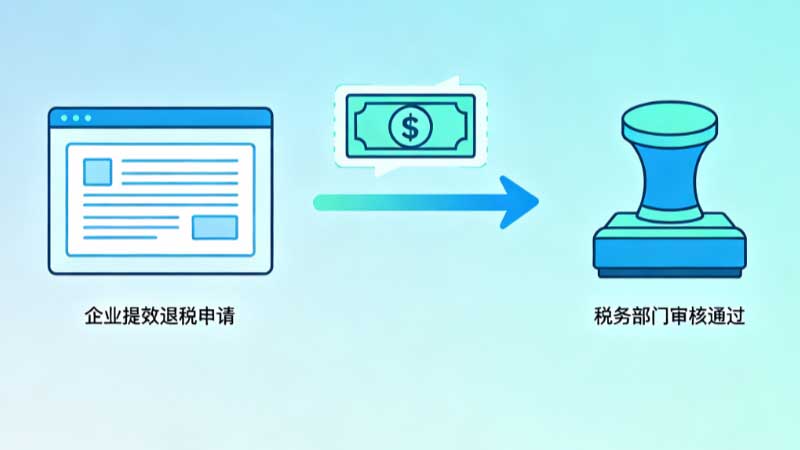
The State Administration of Taxation (STA) has launched a fully electronic export rebate system (出口退税电子化平台) nationwide, effective June 1, 2026. The new platform integrates AI-powered document verification, automated risk assessment, and real‑time payout tracking. Low‑risk claims from Class I and II exporters are now processed within 5‑10 business days – down from the previous 15‑20 days. High‑risk claims still undergo manual review but benefit from faster document submission and status tracking. This guide explains the new system features, eligibility requirements, and practical steps for exporters to access faster payouts.
1. Key Features – AI Verification, Automated Risk Scoring, Real‑Time Tracking
The new electronic export rebate system introduces three transformative features:
- AI‑powered document verification: The system automatically validates customs declarations, VAT invoices, and foreign exchange receipts against the tax authority‘s databases. Document mismatches are flagged in real time, allowing exporters to correct errors before submission. Manual review time is reduced by 70%.
- Automated risk scoring: Each claim is assigned a risk score based on the exporter’s tax credit rating, compliance history, and product category. Low‑risk claims (scores below 30) are routed to an automated fast‑track queue; medium‑risk claims (30‑70) receive partial manual review; high‑risk claims (above 70) undergo full manual audit.
- Real‑time payout tracking: Exporters can monitor claim status – from submission to approval to funds credited – through the e‑Tax Bureau portal or mobile app. Push notifications alert users to approval or document requests.
The system also integrates with the Single Window customs platform, automatically importing export declaration data, reducing manual data entry by up to 80%.
2. Eligibility for Fast‑Track Processing
To qualify for the accelerated 5‑10 day processing, exporters must meet the following criteria:
- Tax credit rating A or B: Class I (A rating) and Class II (B rating) enterprises are eligible. C or D rated enterprises are automatically routed to manual review.
- Clean compliance record: No major tax violations, customs penalties, or audit adjustments in the preceding 24 months.
- Consistent HS code classification: No history of mis‑declaration or frequent HS code changes.
- Digital filing enrollment: The exporter must be registered for the electronic rebate system and have a valid digital certificate (e‑port card).
Exporters that do not yet meet these criteria can apply for fast‑track eligibility after 6‑12 months of clean compliance. The STA recommends that new exporters initially file through a licensed tax agent to establish a compliance record.
3. Step‑by‑Step Electronic Rebate Filing Process
The new filing process is completed entirely online through the e‑Tax Bureau portal (etax.chinatax.gov.cn). Steps:
- Log in using e‑port card or digital certificate. The legal person card is used for approval; operator cards for daily filing.
- Navigate to “Export Tax Refund” module. Select “Electronic Rebate Application.”
- Import customs data. The system auto‑populates export declarations from the Single Window. Verify the data and select the relevant declarations.
- Upload supporting documents. For low‑risk claims, only VAT invoices and foreign exchange receipts are required. The system automatically matches invoices against the tax authority‘s database.
- Review AI‑generated risk score. If the risk score is below 30, the claim is auto‑approved within hours. If between 30‑70, a tax officer reviews within 3‑5 days.
- Submit and track. After submission, the dashboard shows real‑time status. Once approved, funds are credited to the exporter‘s designated bank account within 1‑2 business days.
For first‑time users, the STA offers a guided tutorial and a 24/7 AI chatbot for technical support.
4. Documentation Requirements – Reduced Burden for Low‑Risk Claims
Under the new system, low‑risk claims (Class I and II, risk score below 30) require fewer documents:
- VAT special invoice (fapiao): Electronic version accepted; no physical copy required.
- Customs export declaration: Auto‑imported from Single Window; no manual upload.
- Foreign exchange receipt confirmation: Bank data is automatically matched; receipt upload only required for exceptions.
- Export contract: Retained on file for audit but not submitted (except for high‑risk claims).
For medium‑ and high‑risk claims, additional documents may be requested, including bills of lading, packing lists, and supplier contracts.
5. Consequences of Non‑Compliance or Fraud
While the electronic system speeds up legitimate claims, it also enhances fraud detection. Consequences of non‑compliance include:
- Automatic flagging for manual audit: Any mismatch between declared and actual data triggers a manual review, delaying payout by 30‑60 days.
- Forfeiture of fast‑track eligibility: Exporters with two or more rejected claims in 12 months lose fast‑track status for 2 years.
- Penalties for false declarations: Claiming rebate on non‑exported goods or inflating values results in fines of 0.5‑5 times the falsely claimed amount, plus potential criminal liability.
- Blacklisting: Serious or repeat offenders are added to the tax authority‘s “Untrustworthy Entity List,” blocking all future rebate claims for 1‑5 years.
The STA uses AI to cross‑reference rebate claims with customs data, bank records, and supplier VAT filings. Fraudulent claims are detected within days, not months.
6. Practical Compliance Roadmap for Exporters
To take full advantage of the electronic export rebate system and achieve faster payouts, follow this six‑step roadmap:
- Upgrade to digital filing (By June 30, 2026). Ensure your e‑port card is active and that your tax agent (if any) is registered for the electronic system.
- Maintain A or B tax credit rating (Ongoing). File all VAT and CIT returns on time. Avoid late payments or under‑reporting.
- Verify HS codes and invoice data before submission. Use the AI pre‑check tool to identify discrepancies before filing. Correct errors to avoid risk score increases.
- File claims monthly (By 15th of following month). Timely filing maintains a clean compliance record.
- Monitor risk score and address issues promptly. If your risk score rises above 30, review the flagged transactions and correct underlying issues.
- Retain digital copies of all supporting documents (10 years). Use encrypted cloud storage with backup. The tax authority may audit claims up to 3 years after payout.
Summary: The STA‘s new electronic export rebate system, effective June 1, 2026, uses AI-powered verification, automated risk scoring, and real‑time tracking to reduce processing times for low‑risk claims from 15‑20 days to 5‑10 days. Class I and II exporters (tax credit rating A or B) with clean compliance records automatically qualify for fast‑track processing. The system auto‑imports customs data, validates VAT invoices, and matches foreign exchange receipts. Low‑risk claims require fewer documents, while high‑risk claims undergo manual review. Penalties for fraud include fines, loss of fast‑track eligibility, and blacklisting. By maintaining a high credit rating, filing monthly, and using AI pre‑check tools, exporters can achieve faster payouts and improve cash flow.