
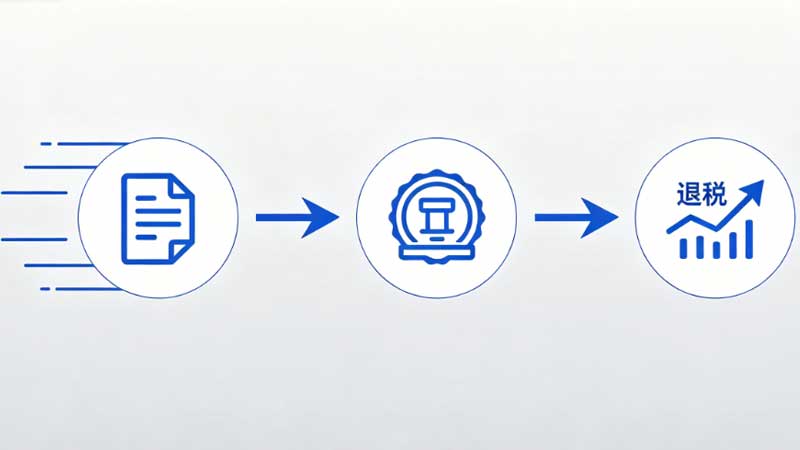
For foreign‑invested enterprises operating as wholly foreign‑owned entities (WFOEs) in China, export VAT refund processing has undergone transformative changes in 2026. The new regulatory framework — anchored by the Measures for the Administration of VAT and Consumption Tax Refunds (Exemptions) for Export Businesses (SAT Announcement No. 5 of 2026) and the Ministry of Finance and SAT Announcement No. 11 of 2026 — has fundamentally streamlined how qualifying WFOEs recover VAT paid on exported goods[reference:0][reference:1]. Key reforms include the extension of the filing deadline to 36 months, accelerated processing for high‑credit enterprises, digital single window filing, and the introduction of a “5‑day” fast‑track mechanism for Class I taxpayers[reference:2][reference:3]. This guide provides a comprehensive overview of the accelerated VAT refund framework, the enhanced digital application process, and a practical roadmap for foreign‑invested manufacturers to optimize their refund timeline while maintaining full compliance.
📑 What You‘ll Learn
- The new 36‑month filing deadline for export VAT refunds
- Classification‑based acceleration: 5‑10‑15 day processing tiers
- New “一表通办” (one‑form processing) and digital filing requirements
- Prerequisites for qualifying WFOEs: documentation, invoicing, and foreign exchange receipts
- The “single window” filing system and digital document retention (10 years)
- Consequences of non‑compliance: overdue filings and misdeclaration penalties
- Practical compliance roadmap for foreign‑invested manufacturers
1. The 36‑Month Filing Extension: A Fundamental Shift
The most impactful change for WFOEs is the extension of the VAT refund filing deadline from the previous 180‑day limit (effectively applied in practice) to a clear statutory 36‑month window from the date of customs clearance. Under the 2026 rules, the standard filing timeline operates in two stages.
First Stage — Standard Filing Window: For goods cleared through customs, the WFOE must file its refund application in the period starting from the month following export clearance up to April 30 of the following calendar year[reference:4][reference:5]. During this window, normal filing rules apply, and refunds are processed according to the enterprise‘s classification tier.
Second Stage — Extended Window (April 30 to 36 months): If a WFOE misses the April 30 deadline, it can still file for a refund as long as the application is submitted within 36 months from the export clearance date. However, filings submitted after April 30 are subject to additional requirements. The WFOE must provide foreign exchange receipt materials (e.g., bank receipts, settlement confirmations) as part of the application package[reference:6][reference:7].
Ultimate Cut‑off: Any export that remains unclaimed beyond the 36‑month period will be treated as a domestic sale. The WFOE will be required to pay VAT on those goods retroactively and may also be subject to late payment surcharges[reference:8]. Notably, this is not a sunset period that becomes effective only after 36 months — instead, the April 30 deadline remains the primary target. The extended 36‑month period is a “second‑chance” window for those who missed the April 30 date, but only those who use the 36‑month window must also complete foreign exchange receipt verification.
<h2.2 Enterprise Classification: The Key to Accelerated Processing
Not all WFOEs receive the same processing speed. Under the export enterprise classification system, approved businesses are divided into four tiers based on their compliance history, tax credit rating, and internal risk control systems[reference:10].
- Class I (Best credit standing): 3‑year clean record with no serious violations, internal risk controls in place, and an A‑level tax credit rating. Refunds are processed within 5 working days of application submission[reference:11].
- Class II (Good standing): Most compliant WFOEs fall into this category. The processing time is 10 working days[reference:12].
- Class III (Monitoring level): Enterprises with a history of filing errors or minor violations. Processing time is 15 working days[reference:13].
- Class IV (High‑risk monitoring): Businesses under active investigation or with serious prior violations. Processing times are not fixed, with additional audit steps required.
To qualify for the accelerated 5‑day processing, a WFOE must apply for Class I designation through its local tax authority. The application requires demonstrating a clean compliance record and filing an internal risk control report. For Class I and Class II enterprises, the tax authority applies a “fast‑track” review process, while Class III enterprises are subject to more detailed scrutiny. The processing time counts from the date the complete application is received by the tax office.
<h2.3 Streamlined Digital Application: “One‑Form Filing” and E‑Documentation
The 2026 rule updates have fundamentally simplified the administrative burden of VAT refund applications. The previous requirement of submitting five separate forms has been consolidated into a single universal form, reducing the filing burden by an estimated 55% in terms of time and reducing the chance of administrative errors[reference:14][reference:15]. The change eliminates the previous system of separate filings for basic export registration and four special business types, merging them all into a single application step. This also dramatically reduces the risk of inconsistency.
The 2026 rules have also embraced digital transformation. WFOEs may now submit applications through three online channels: the Unified National E‑Tax Bureau Portal, the Standard International Trade “Single Window” (单一窗口), or an offline tool for businesses that prefer desktop filing[reference:16]. The “Single Window” platform is particularly advantageous as it integrates customs declaration data, logistics data, and tax information, reducing the need for manual data entry.
In a major shift, supporting documents may now be retained in digital, image, or fully electronic formats. The retention period for all export documentation has been extended to 10 years from the previous 5‑year requirement, giving tax authorities a longer audit window while simultaneously reducing the cost of physical document storage for businesses. The system also introduces three new electronic certificate categories, bringing the total to 9 fully electronic certificate types and eliminating paper filing obligations for many proof documents[reference:19][reference:20].
<h2.4 Prerequisites for Qualifying WFOEs
To receive an accelerated VAT refund, a WFOE must satisfy four cumulative conditions established by the 2026 rules[reference:21][reference:22].
- Enterprise qualification: The WFOE must be a general VAT taxpayer with a valid export refund registration. Reduced‑rate taxpayers are not eligible for refunds (they may qualify for exemptions).
- Export nature of goods: The exported goods must be subject to VAT/CST and physically cleared through customs. The specific refund rate depends on the product‘s customs tariff code, and some items may have nil or reduced refund rates.
- Export sales recorded: The transaction must be recognized as an export sale in the company’s financial records.
- Foreign exchange receipt completed: The WFOE must have received payment in a convertible currency (or RMB settled through approved channels). The foreign exchange receipt must be verified by the bank, and the amount of foreign currency actually received must match the value declared on the customs invoice.
In addition to these conditions, the WFOE must have collected all relevant documentation, including the customs export declaration form, VAT special invoice (a copy or scanned original), delivery note / bill of lading, and foreign exchange receipt confirmation from the bank. The entire package can be submitted electronically without paper copies in most cases, but originals must be retained for audit purposes for 10 years.
<h2.5 Reporting Foreign Exchange Receipts: Differentiated Requirements
Under the new rules, the requirement to submit foreign exchange receipt materials differs depending on the timing of the VAT refund application. For WFOEs filing within the standard window (from export date up to April 30 of the following year), the tax authority does not require the submission of foreign exchange receipts at the time of application. This “submit‑first, verify‑later” approach significantly accelerates the initial application process.
However, WFOEs that file after April 30 but within the 36‑month period must submit full foreign exchange receipts as part of their application. This includes bank foreign exchange receipts, settlement confirmations, and, where applicable, a written explanation for any third‑party payment arrangements. In all cases, if a WFOE fails to receive foreign exchange payment by the filing deadline, it must repay any refunds already received and convert the transaction into a domestic sale subject to VAT[reference:24].
An important nuance applies to cross‑border service exports and intangible asset transfers. For these categories, payment receipts are considered “foreign exchange receipt materials” directly, requiring no additional foreign exchange verification documentation.
<h2.6 Consequences of Non‑Compliance
The 2026 rules impose strict penalties for non‑compliance, as part of the government‘s shift toward a lighter approval process but harsher post‑audit enforcement model.
- Missed filing deadline: Goods exported but not claimed for refund within 36 months will be treated as domestic sales. The WFOE will be liable for the full VAT amount on those goods, plus late payment surcharges calculated at 0.05% per day from the date the liability arose. In practice, this creates a substantial financial penalty for late filers[reference:26].
- Fraudulent applications: Any WFOE found to have submitted falsified documentation or to have claimed refunds for goods that were not actually exported will be subject to a multi‑tier penalty. The company may be required to repay the fraudulently claimed refund plus interest, pay a penalty ranging from 50% to 500% of the underpaid tax, and have its tax classification downgraded to Class IV for a minimum of 5 years. Individuals responsible may face personal liability under criminal law.
- Document retention failure: The new 10‑year retention requirement is actively enforced. If a WFOE cannot produce audit documentation upon request, its refund status may be suspended until the documents are located, and its classification may be downgraded to Class III.
The combination of an accelerated timeline for compliant businesses and severe penalties for non‑compliance represents a fundamental shift in China‘s export VAT enforcement strategy — efficiency for honest filers, and heavy sanctions for those who fail to comply.
<h2.7 Practical Compliance Roadmap for Foreign‑Invested WFOEs
To leverage the accelerated VAT refund processing while avoiding compliance pitfalls, foreign‑owned WFOEs should follow this six‑step roadmap:
- Conduct export portfolio audit (Immediate): Review all exports made since January 1, 2026, to confirm that the customs declarations and VAT special invoices are consistent. Identify any applications that missed the first window (April 30, 2026) but still fall within the 36‑month window. For any exports that missed the April 30 deadline, prioritize collecting outstanding foreign exchange receipts to qualify for the extended window.
- Apply for Class I classification (Month 1): If your WFOE meets the clean compliance and risk control criteria, apply to the local tax authority for Class I designation. Prepare an internal risk control report describing your financial review procedures, document management systems, and employee training protocols. For WFOEs that do not yet meet Class I standards, develop a compliance improvement plan to aim for upgrade at the next annual review cycle.
- Optimize foreign exchange receipt timing (Ongoing): For exports where payment is expected after April 30 of the following year, plan to apply for the refund during the extended window only after the foreign exchange receipt has been confirmed. Use the earlier “no‑foreign‑exchange‑receipt” window for exports that have already been paid, to take advantage of faster initial processing.
- Implement digital document management (Month 2): Set up a secure electronic filing system that integrates with the “Single Window” platform. Ensure that all supporting documents (customs declarations, invoices, transport documents, foreign exchange receipts) are stored in searchable digital format with a clear 10‑year retention schedule. Use the platform‘s data pre‑fill features to minimize manual entry errors.
- File tax returns on a monthly schedule (Ongoing): Submit VAT refund applications monthly, even if no exports occurred in that period, to maintain compliance. For foreign‑exchange‑eligible exports, file during the standard window (up to April 30 of the following year). For exports with delayed payment receipts, wait until payment is verified before filing.
- Stay informed on policy updates (Ongoing): The SAT frequently issues implementation guidance for the new rules. Monitor the National Tax Service policy update service, which provides free automated notifications for changes to refund rates, filing errors, and reporting requirements.
Summary: China’s 2026 export VAT refund rules have fundamentally accelerated processing for qualifying WFOEs while extending the filing deadline to 36 months. Key reforms include the consolidation of five application forms into a single online process, digital document retention for 10 years, a three‑tier processing timeline (5 days for Class I, 10 days for Class II, 15 days for Class III), and a simplified foreign exchange receipt requirement during the standard window. WFOEs that qualify for Class I status receive the fastest refunds, directly improving working capital. To fully benefit, foreign‑invested manufacturers should audit their export portfolios, apply for optimal classification, implement digital document systems, and maintain strict compliance with the new 36‑month deadline.