
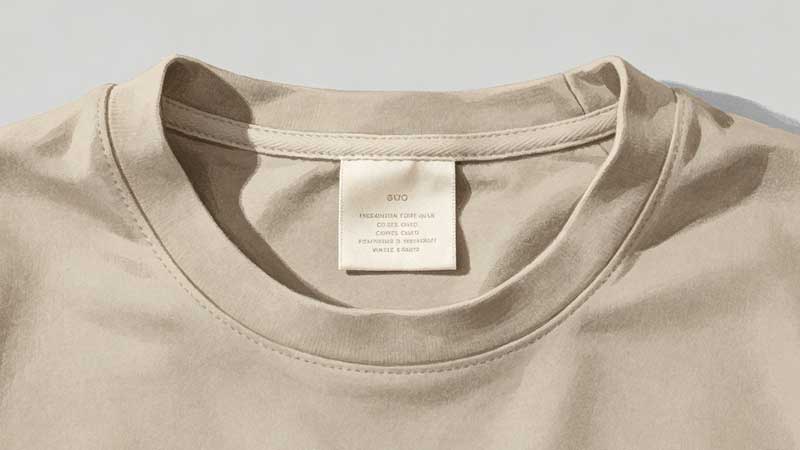
The landscape of apparel labeling in China has undergone a decisive transformation. With the full implementation of GB/T 5296.4-2025 “Instructions for use of consumer products – Part 4: Textiles and Clothing” and the newly revised “Measures for the Supervision and Management of Fiber Product Quality” (taking effect July 1, 2026), Chinese authorities have significantly tightened fiber disclosure requirements for both domestic and imported clothing. For foreign apparel manufacturers, sourcing agents, and brand owners, understanding these new mandatory fiber disclosure rules for imported clothing is no longer optional—it is a legal necessity for customs clearance and market access. This guide provides a comprehensive breakdown of the regulatory framework, mandatory label elements, recent 2026 updates, and practical compliance steps.
1. The Regulatory Framework: GB/T 5296.4-2025 and GB/T 29862-2013
The foundation of clothing labeling in China rests on two interrelated standards. GB/T 5296.4-2025 “Instructions for use of consumer products – Part 4: Textiles and Clothing” is the primary standard that specifies what information must be provided to consumers through labels, packaging, or instruction manuals. It covers all aspects of product instructions, including product name, manufacturer details, fiber composition and content, specifications, washing care instructions, and safety category[reference:0]. While GB/T 5296.4 is technically a recommended standard, it is widely enforced by customs as the de facto mandatory framework.
The second critical standard is GB/T 29862-2013 “Textiles—Identification of fiber content”, which is explicitly referenced by GB/T 5296.4—giving it legally binding force. GB/T 29862 specifies the labeling requirements, labeling principles, expression methods, tolerances, and conformity determination for fiber content in textile products sold in China[reference:2]. Under this standard, every garment must have a fiber content label attached, and every finished product must have a durable fiber content label (usually sewn into the garment). The standard also requires that fiber names use standardized terminology: natural fibers must follow GB/T 11951, chemical fibers must follow GB/T 4146.1, and down/feather fibers must follow GB/T 17685.
2. Mandatory Label Content for Imported Clothing Under GB/T 5296.4-2025
Under the current regulatory framework, imported clothing sold in China must include the following mandatory elements on its label or packaging. According to customs inspection guidelines, items marked with an asterisk (*) are mandatory check items—any missing or non-compliant element will result in a failed inspection and shipment hold.
2.1 Product Name
The product name must truthfully reflect the product‘s characteristics and be in simplified Chinese. Generic descriptions such as “apparel” or “garment” are insufficient; specific names such as “Cotton Knitted T‑Shirt” or “Wool Blend Jacket” are required[reference:6].
2.2 Manufacturer Name and Address (Overseas)
The label must clearly state the name and address of the legally responsible manufacturer. For imported products, the country of origin (e.g., “Made in Vietnam”) must be clearly indicated, along with the name and address of the agent, importer, or distributor registered in China[reference:7].
2.3 Fiber Composition and Content (Mandatory, Durable Label)
This is the core of the fiber disclosure rules. The label must specify the percentage of each fiber component in the garment (e.g., “Cotton 80%, Polyester 20%”)[reference:8]. The fiber content must be verified against the customs declaration—any inconsistency between the label and declared composition will trigger immediate inspection and potential rejection[reference:9].
2.4 Size or Specification (Mandatory, Durable Label)
Clothing must bear size specifications in accordance with GB/T 1335, such as “170/88A” for men‘s apparel or “165/84A” for women’s apparel[reference:10]. The size on the product label must match the commercial invoice and packing list[reference:11].
2.5 Washing and Care Instructions (Mandatory, Durable Label)
The care label must use standardized graphic symbols in accordance with GB/T 8685, specifying washing temperature, bleaching method, drying method, ironing instructions, and professional textile care requirements[reference:12]. The symbols must appear in the correct sequence: washing → bleaching → drying → ironing → professional care[reference:13]. Failure to follow this sequence is a common cause of inspection failure.
2.6 Product Standard Number (Mandatory)
Each garment must indicate the product standard it complies with (e.g., GB/T 22849-2024 for knitted T‑shirts, GB/T 2660-2024 for shirts, GB/T 14272-2021 for down garments). The standard must be appropriate for the product type[reference:14].
2.7 Safety Category (Mandatory)
All textiles must indicate the safety category under GB 18401 (or GB 31701 for children‘s clothing)[reference:16]. Categories are:
- Class A: Infant textile products (for children up to 36 months) – must also comply with GB 31701
- Class B: Products that come into direct contact with skin
- Class C: Products that do not come into direct contact with skin[reference:17]
2.8 Country of Origin
The country of origin must be clearly indicated on the product or its packaging (e.g., “Made in China,” “Made in Vietnam”). The origin information on the label must match the customs declaration[reference:18][reference:19].
2.9 Agent/Importer Information (for Imported Products)
For imported clothing, the label must include the name and address of the agent, importer, or distributor legally registered in China. This information is critical for customs verification[reference:20].
3. Durability Requirements: The Critical Distinction Between Label Types
Under GB/T 5296.4, three specific elements must appear on durable labels (labels that are permanently attached to the product and remain legible throughout the product’s life): product size, fiber composition and content, and washing care instructions. All other information (product name, manufacturer details, safety category, country of origin) may be placed on hang tags or packaging. The durable label (commonly known as the “wash care label” or “permanent label”) must be securely sewn into the garment, typically along the side seam, and must remain legible after at least five washes[reference:22].
There are narrow exceptions: certain product categories such as fabric pieces, knitting yarn, socks, and gloves may not require durable labels if their application would adversely affect product use. For most finished clothing items, however, durable labels are mandatory. Importers must also ensure that the information on hang tags and durable labels is consistent; discrepancies between different label forms are a common cause of customs rejection.
4. Fiber Content Tolerances Under GB/T 29862-2013
Fiber content labeling is not just about what is stated—it is also about accuracy. GB/T 29862-2013 establishes specific tolerance limits for fiber content labeling:
- When the labeled fiber content is ≤10%, the allowable tolerance is ±3% (absolute). When the labeled fiber content is ≤3%, the actual content must not be zero[reference:26].
- For filling materials: When the labeled fiber content of a filling is ≤20%, the allowable tolerance is ±5%; when the labeled fiber content of a filling is ≤5%, the actual content must not be zero[reference:27].
When fiber content deviations exceed these allowances, the product is considered non-compliant. Common violations include labeling a garment as “100% Cotton” when trace polyester is present (even at levels below 5%, which would require disclosure), or incorrectly labeling recycled or reprocessed fibers without proper identification. Importers should also note that when a garment contains multiple components (e.g., a jacket with different fabric panels or linings), each component exceeding 15% of the product’s surface area must have its fiber content separately labeled. Failure to disclose such panels is a frequent cause of inspection failure.
5. 2026 Regulatory Wave: The New Fiber Product Quality Supervision Measures
On January 13, 2026, the State Administration for Market Regulation (SAMR) announced the revised “Measures for the Supervision and Management of Fiber Product Quality” (Order No. 119, effective July 1, 2026), representing the most significant overhaul of textile compliance in nearly a decade. These measures introduce three key labeling-related requirements that foreign manufacturers must incorporate into their supply chain compliance protocols.
5.1 Expanded Scope – All Daily-Use Fiber Products Now Under Unified Supervision
The new measures expand the regulatory scope from three product categories (quilting fiber products, school uniforms, and fabric) to all daily-use fiber products, covering everyday consumer textiles including casual wear, intimate apparel, home textiles, curtains, and accessories[reference:30]. For importers, this means that virtually any textile product entering China now falls under the same rigorous labeling and quality supervision framework.
5.2 Mandatory Fiber, Content, and Safety Category Labeling for High-Risk Apparel
Under Article 11 of the measures, three high-risk product categories now have mandatory fiber labeling requirements that go beyond general standards: school uniforms, underwear, and infant fiber products must explicitly label fiber composition, percentage content, and safety category[reference:31][reference:32]. For infant fiber products, these labeling obligations apply to both the outer fabric and any filling materials.
This requirement is backed by a zero-tolerance enforcement policy. The measures explicitly prohibit the use of reprocessed fibers in the production of underwear and infant fiber products[reference:33]. Violations are subject to severe penalties, including public exposure of cases, inclusion in market supervision blacklists, and cross-departmental joint sanctions[reference:34].
5.3 Mandatory Recycled Material Labeling
Under the new measures, any fiber product utilizing recycled chemical fibers, reprocessed fibers, or washed reclaimed animal fibers must explicitly indicate on the label that the materials used include recycled components[reference:35][reference:36]. This transparency requirement applies to fibers made from waste fiber products, fiber waste, or recycled polymer materials through physical melting, chemical regeneration, or physicochemical processes[reference:37]. For imported clothing that uses recycled materials, the Chinese label must clearly state this fact—failure to disclose recycled material content can lead to customs holds and fines.
6. Customs Inspection: What Importers Must Know
China Customs (GAC) conducts rigorous label inspections for imported clothing. The inspection process compares the physical label against the customs declaration. Common rejection reasons include:
- Missing Chinese language on labels: Labels in English only are rejected. Simplified Chinese is mandatory; bilingual labels are permitted as long as Chinese is equally prominent.
- Inconsistent fiber content between label and declaration: If the declared composition in customs documents differs from the label, the shipment may be flagged for physical inspection.
- Missing safety category: Garments without A/B/C classification are non-compliant.
- Incorrect placement of durable label on infant clothing: Labels sewn in positions that come into direct skin contact violate GB 31701 and will be rejected.
- Washing symbols in wrong sequence or incomplete: The correct sequence is washing → bleaching → drying → ironing → professional care. Missing symbols or incorrect order leads to rejection[reference:41].
- No manufacturer or agent information: Both the overseas manufacturer and China-based agent details must appear.
Importers are strongly advised to conduct pre-shipment label audits using a CNAS-accredited testing lab. Many customs holds can be avoided by catching labeling errors before the goods leave the country of origin.
7. Practical Compliance Roadmap for Clothing Importers
To ensure smooth customs clearance and full compliance with China‘s mandatory fiber disclosure rules, clothing importers should follow this six-step plan:
- Design compliant labels before production (Immediate): Work with your overseas supplier to create labels that include all mandatory elements in simplified Chinese: product name, fiber composition (with percentages), manufacturer details, China agent information, origin, size, safety category, product standard number, and care instructions. Use durable labels for size, fiber content, and care instructions.
- Pre-shipment fiber content testing (1-2 months before shipment): Engage a CNAS-accredited textile laboratory to test fiber composition and verify that the results fall within GB/T 29862 tolerance limits. Testing should cover both surface fabric and any components exceeding 15% of surface area, as well as filling materials where applicable.
- Verify size system compliance: Ensure that the size labeling follows GB/T 1335 (e.g., “170/88A” for men‘s apparel) and that the size on the label matches the customs declaration.
- Recycled material disclosure verification (New for 2026): If your garment contains recycled chemical fibers, reprocessed fibers, or washed reclaimed animal fibers, ensure the label explicitly discloses this fact. For garments containing such materials that fail to disclose, prepare for customs detention.
- Internal label consistency check (Pre-shipment): Verify that the hang tag information matches the durable label information. Any discrepancy will be flagged during inspection.
- Engage a qualified customs broker with textile expertise: A customs broker familiar with GB/T 5296.4 and GB/T 29862 requirements can pre-screen your labeling and detect errors before submission, saving significant time and storage fees.
Summary: China‘s new mandatory fiber disclosure rules for imported clothing—governed by GB/T 5296.4-2025 and GB/T 29862-2013—require foreign manufacturers and importers to ensure accurate, consistent, and durable labeling for all garment categories. The 2026 Fiber Product Quality Supervision Measures (effective July 1, 2026) expand mandatory fiber and safety category labeling to school uniforms, underwear, and infant products, while introducing new recycled material disclosure obligations. Customs inspections now enforce strict content verification, durable label placement rules (including infant safety requirements), and consistency between label and declaration data. Importers who invest in pre‑shipment lab testing, label audits, and compliance training will avoid costly holds, fines, and reputational damage. With enforcement intensifying across all daily-use fiber products, proactive compliance is the only path to uninterrupted market access in China‘s dynamic apparel market.