
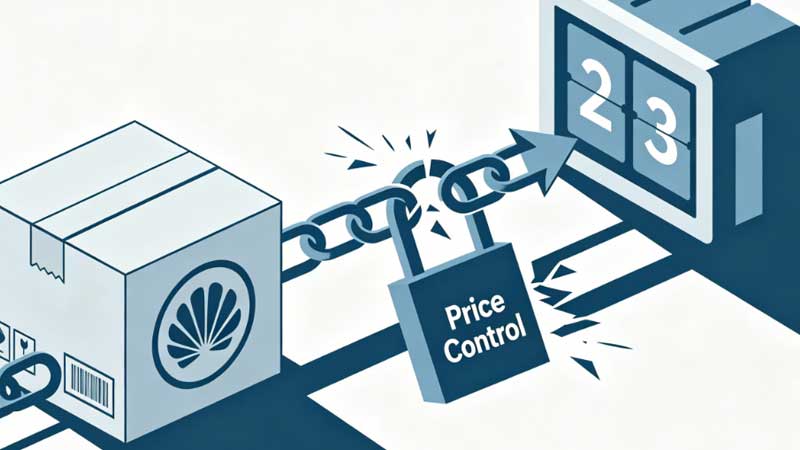
Brand owners who have invested in traditional Pinduoduo price control strategies—monitoring storefronts, filing complaints against unauthorized sellers, enforcing distribution agreements—are discovering an alarming trend. Their carefully constructed pricing architectures are being dismantled not through persistent storefront listings, but through a far more aggressive and fleeting mechanism: Pinduoduo flash sales. These time-limited, platform-promoted discount events compress price violations into windows of hours rather than days, selling volumes that would take weeks through standard listings, and then vanishing before conventional enforcement workflows can respond. Our enforcement data across multiple brand categories reveals a striking pattern: 43% of price violations on Pinduoduo now originate from flash sale mechanisms rather than regular storefront listings. This is not a marginal shift. Flash sales have become the primary vector through which unauthorized discounting erodes brand pricing on one of China's most price-aggressive platforms. The traditional enforcement playbook—weekly monitoring sweeps, individual complaint filings, takedown processing timelines measured in business days—is structurally mismatched against a promotional format that completes its entire lifecycle within a single afternoon. This guide analyzes how Pinduoduo's flash sale model enables flash sale MAP violations at scale, presents the data behind the 43% finding, and outlines the real-time monitoring and rapid-response enforcement strategies required to achieve effective brand price protection in the flash sale era.
📑 What You'll Learn
- How Pinduoduo's flash sale mechanism undermines traditional price control
- Data analysis: why 43% of price violations now originate from flash sales
- The structural advantages flash sales give unauthorized discounters
- Real-time monitoring systems for flash sale detection
- Rapid-response enforcement protocols for time-limited promotions
- Building a flash sale-aware price protection strategy
1. The Flash Sale Mechanism: How Pinduoduo's Promotion Model Works Against Brands
To understand why Pinduoduo flash sales have become the dominant vector for price erosion, brand owners must first understand how the flash sale mechanism operates and why it is so attractive to unauthorized sellers. A Pinduoduo flash sale is a platform-promoted, time-limited discount event during which a product is offered at a significantly reduced price for a defined window—typically two to twenty-four hours. The flash sale listing receives prominent platform placement, algorithmic traffic amplification, and urgency-driven consumer messaging that compresses purchase decisions into minutes. Consumers who might spend days comparing prices across platforms for a standard listing are incentivized to purchase immediately during a flash sale, driven by countdown timers, limited quantity indicators, and social proof displays showing real-time purchase activity.
For unauthorized sellers, the flash sale mechanism offers structural advantages that standard listings cannot match. The first advantage is volume velocity. An unauthorized seller operating a standard storefront listing at a discounted price might sell twenty units over a week. The same seller, running a flash sale at the same price, can sell two hundred units in six hours. The compressed transaction window means that even if the brand owner detects and enforces against the flash sale, the majority of the sales volume has already occurred before any enforcement action can take effect. The commercial damage is front-loaded into the period before enforcement response is possible.
The second advantage is detection difficulty. Standard unauthorized listings persist on the platform, making them detectable through periodic monitoring sweeps. Flash sale listings appear suddenly, often with limited advance notice, and disappear when the event window closes regardless of whether enforcement action has been taken. A brand owner conducting weekly price monitoring may completely miss flash sales that occurred, ran their course, and vanished between monitoring sweeps. The violation occurred, the sales were made, the price anchor was lowered in consumer minds, and the evidence has disappeared before the brand's enforcement team even knows it happened.
The third advantage is enforcement friction. Even when a brand owner detects an active flash sale, the standard enforcement workflow—document the violation, prepare a complaint, submit through the IP protection portal, wait for platform review, receive a determination—typically takes one to three business days. The flash sale ends in hours. By the time the platform processes the complaint, the listing has expired, the event is over, and the complaint may be dismissed as moot because there is no active listing to take down. The seller faces no penalty, retains the sales revenue, and can run another flash sale the following week.
2. The 43% Finding: Data Analysis of Flash Sale Price Violations
The 43% of price violations figure is not an estimate. It emerges from systematic monitoring data collected across multiple brand categories over a twelve-month period, analyzing the origin point of unauthorized discounting incidents on Pinduoduo. Understanding how this data was collected and what it reveals is essential for brand owners evaluating whether their current enforcement strategies adequately address the flash sale threat.
The analysis tracked price violation incidents across consumer electronics, beauty and personal care, apparel and footwear, and home goods categories. A price violation was defined as any listing offering branded products at prices more than 15% below the brand's established minimum advertised price, where the seller was confirmed as unauthorized through distribution channel verification. Each violation incident was categorized by its listing mechanism: standard storefront listing, flash sale event, group-buy promotion, coupon-based discount, or live-stream exclusive price.
The findings were consistent across categories with modest variation. Flash sales accounted for 43% of all price violation incidents overall, exceeding standard storefront listings at 31%, with the remaining 26% distributed across group-buy promotions, coupon mechanisms, and live-stream pricing. In the beauty and personal care category, flash sales were even more dominant, accounting for 51% of price violations—reflecting the category's high consumer purchase frequency and the effectiveness of urgency-driven discounting for cosmetics and skincare products. In consumer electronics, flash sales accounted for 39% of violations, with standard listings still significant due to the category's higher average price point and longer consumer consideration cycles.
More concerning than the static percentage is the trend line. Twelve months ago, flash sales accounted for approximately 28% of price violations. The proportion has increased steadily month over month, gaining roughly 1.2 percentage points per month. If this trend continues, flash sales will account for more than half of all Pinduoduo price violations within the current year. This trend reflects both Pinduoduo's increasing platform emphasis on flash sale mechanisms and unauthorized sellers' adaptation to the enforcement advantages the format provides. The data makes clear that flash sale MAP violations are not a niche problem; they are the emerging dominant form of online price erosion on Pinduoduo.
3. Real-Time Monitoring: The Prerequisite for Flash Sale Enforcement
Conventional price monitoring—weekly or daily sweeps of seller storefronts and search results—is designed for persistent listings that remain visible between monitoring intervals. Pinduoduo flash sales require a fundamentally different monitoring infrastructure: continuous, real-time surveillance capable of detecting price violations during the narrow window when flash sales are active. Without real-time detection, flash sale enforcement is simply impossible; you cannot enforce against what you never see.
Effective flash sale monitoring operates on a continuous scanning model rather than a periodic sweep model. Monitoring systems must maintain persistent surveillance of Pinduoduo's flash sale channels, promotion pages, and event calendars, scanning newly activated flash sale listings against brand product catalogues and pricing parameters. Detection must occur within minutes of flash sale activation, not hours or days, because the enforcement window is defined by the flash sale duration. A monitoring system that detects a flash sale two hours into a four-hour event has captured 50% of the enforcement window; a system that detects it the next day has captured nothing.
The monitoring system must capture specific data points that support both immediate enforcement and subsequent analysis. For each detected flash sale, the system should record the seller identity and account history, the product identification including SKU-level specificity, the flash sale price and discount percentage relative to MAP, the flash sale start time and scheduled duration, the real-time sales velocity data that Pinduoduo displays during active flash sales, and the linked storefront listing if one exists. This data package enables immediate enforcement action while also building the historical record that supports pattern analysis and repeat infringer escalation.
Automated alert routing is essential for operationalizing real-time monitoring data. Flash sale detection alerts must be routed immediately to designated enforcement personnel with clear action protocols. A detection at 8:00 PM on a Saturday is worthless if no one sees it until Monday morning. The monitoring system should support tiered alerting: high-priority alerts for flash sales involving flagship products, high discount percentages, or known repeat infringers, with immediate notification through multiple channels; standard alerts for lower-priority incidents that can be processed during business hours.
4. Rapid-Response Enforcement Protocols for Time-Limited Promotions
Detection without enforcement capability is merely documentation of damage. The enforcement response to Pinduoduo flash sales must be as fast as the flash sale format itself. This requires pre-established rapid-response protocols that compress the traditional enforcement timeline from days to hours—or, ideally, to minutes.
The first component of rapid response is pre-verified complaint templates. Standard enforcement workflows waste precious time drafting complaint language, compiling evidence attachments, and formatting submissions for each individual incident. For flash sale enforcement, brand owners should prepare pre-verified complaint templates that are substantially complete before any specific incident occurs. The template includes pre-loaded IP registration documentation, pre-drafted complaint language establishing the brand's pricing policy and the seller's unauthorized status, and pre-formatted evidence fields that only require insertion of incident-specific data—seller name, product link, flash sale price, and timestamp. When a flash sale alert arrives, the enforcement team fills in the incident-specific fields and submits within minutes rather than hours.
The second component is direct platform escalation channels. Standard IP protection portal submissions enter a general processing queue with timelines measured in business days. For active flash sales, this timeline is useless. Brand owners enrolled in Pinduoduo's enhanced brand protection program should establish direct escalation channels with their dedicated platform contacts specifically for time-sensitive flash sale enforcement. A pre-established understanding that flash sale complaints will be prioritized for immediate review—with a target response time measured in hours rather than days—is essential. This requires relationship investment with platform enforcement personnel before specific incidents arise.
The third component is the layered enforcement approach. While pursuing immediate platform action against the active flash sale, simultaneously deploy parallel enforcement measures. If the unauthorized seller can be linked to a known distribution leakage point, initiate contractual enforcement against the diverting distributor. If the seller's storefront contains copyright-infringing brand imagery, file a separate copyright complaint that may be processed faster than the pricing complaint. If the seller has a history of violations, reference that history in the complaint to support account-level penalties rather than mere listing removal. The layered approach ensures that even if the specific flash sale ends before platform action completes, enforcement consequences still attach to the seller.
The fourth component is post-incident analysis and escalation. After each flash sale incident, document the enforcement response timeline, the platform's action, and the outcome. Incidents where enforcement failed—the flash sale completed before action was taken, or the platform declined to act on a moot listing—should be escalated through brand support channels with specific recommendations for process improvement. Over time, this post-incident escalation drives platform adaptation to the unique enforcement challenges of flash sale formats.
5. Building a Flash Sale-Aware Price Protection Strategy
Addressing the flash sale MAP violation challenge requires more than adding real-time monitoring to existing enforcement workflows. It demands a strategic reorientation that recognizes flash sales as the primary price erosion vector and allocates enforcement resources accordingly. Here is a practical framework for building a flash sale-aware brand price protection strategy:
- Allocate monitoring resources proportional to the threat. If 43% of price violations originate from flash sales, at least 43% of monitoring resources should be dedicated to real-time flash sale surveillance. Brands still allocating 90% of monitoring budget to periodic storefront sweeps are monitoring where violations used to be, not where they are now.
- Establish flash sale-specific enforcement KPIs. Traditional enforcement metrics—number of complaints filed, number of listings removed—are inadequate for flash sale enforcement, where a single flash sale may generate more brand damage than dozens of standard listings. Develop metrics that capture flash sale-specific outcomes: number of flash sales detected, percentage intercepted before completion, sales volume prevented through interception, and trend in flash sale frequency over time.
- Build seller-level flash sale histories. Track which sellers repeatedly run flash sales below MAP, the frequency and discount depth of their flash sale activity, and whether flash sales migrate across multiple accounts controlled by the same operator. This seller-level intelligence supports escalated enforcement actions including account-level penalties for chronic flash sale abusers.
- Integrate flash sale intelligence with supply chain enforcement. Flash sales require inventory. An unauthorized seller running weekly flash sales of a branded product is moving significant volume that must be sourced somewhere. Use flash sale frequency and volume data to prioritize supply chain forensic investigations. A seller moving 500 units per month through flash sales represents a major distribution leakage point that supply chain enforcement should target urgently.
- Engage Pinduoduo on flash sale policy development. Pinduoduo's platform policies regarding flash sale participation, seller eligibility, and pricing rules are evolving. Brand owners should engage proactively with platform policy teams to advocate for flash sale rules that respect brand pricing structures—for example, requiring sellers to verify authorization status before accessing flash sale promotion tools, or implementing automated price comparison against brand-submitted MAP schedules during flash sale approval.
The shift of price violations to flash sale mechanisms is not a temporary tactical adjustment by unauthorized sellers. It reflects a structural adaptation to the enforcement advantages the format provides, and it will continue as long as brand enforcement strategies remain optimized for persistent listings rather than time-limited promotions. Brands that reorient their price protection strategies around real-time detection and rapid response will close the enforcement gap that flash sales exploit. Those that continue relying on periodic monitoring and standard complaint timelines will watch an increasing share of their price violations occur, complete, and disappear before enforcement even begins.
Summary: Pinduoduo flash sales have emerged as the dominant vector for unauthorized price erosion, with systematic monitoring data revealing that 43% of price violations now originate from flash sale mechanisms rather than standard storefront listings. This trend, increasing at approximately 1.2 percentage points monthly, reflects unauthorized sellers' adaptation to the structural advantages flash sales provide: volume velocity that front-loads sales before enforcement can respond, detection difficulty due to time-limited visibility, and enforcement friction where standard complaint timelines render actions moot before platform review completes. Addressing this challenge requires a fundamental reorientation from periodic monitoring to continuous real-time surveillance capable of detecting flash sale activations within minutes, rapid-response enforcement protocols using pre-verified complaint templates and direct platform escalation channels to compress response timelines from days to hours, and layered enforcement deploying multiple complaint types simultaneously to ensure consequences attach even when specific flash sales complete before action is taken. Effective brand price protection in the flash sale era demands monitoring resource allocation proportional to the threat, flash sale-specific enforcement KPIs, seller-level flash sale history tracking, integration of flash sale intelligence with supply chain forensic investigations, and proactive platform policy engagement. Brands that reorient their Pinduoduo price control strategies around the temporal dynamics of flash sale promotions will close the enforcement gap; those that do not will continue losing pricing integrity to violations they never see and cannot stop.