
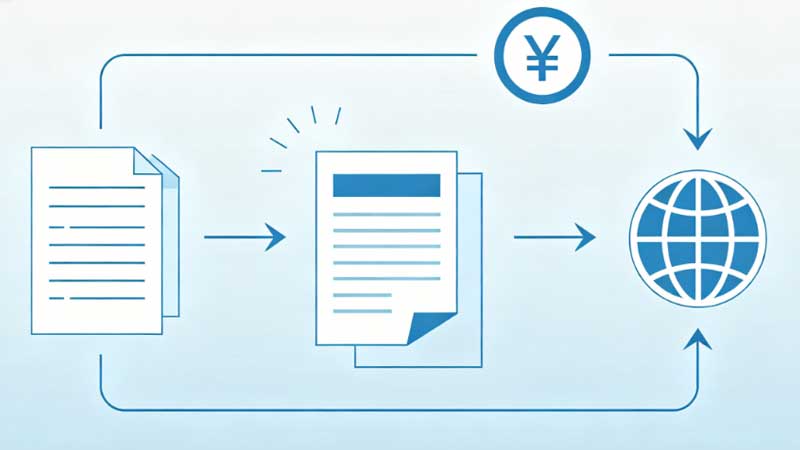
For wholly foreign-owned enterprises (WFOEs) engaged in international trade, foreign currency settlement has historically been a paperwork‑intensive process requiring multiple submissions to both banks and the State Administration of Foreign Exchange (SAFE). In 2026, SAFE has implemented a comprehensive simplification of foreign currency settlement procedures for trading WFOEs, reducing documentation requirements, raising settlement limits, and enabling fully electronic applications. These changes are part of China‘s broader push to facilitate cross‑border trade and optimize the business environment. This guide provides a complete overview of the streamlined rules, eligibility criteria, and practical steps for trading WFOEs to benefit from faster, easier forex settlement.
📑 What You'll Learn
- Key simplifications: reduced documentation, higher settlement limits, electronic applications
- Eligibility criteria for trading WFOEs to access streamlined procedures
- Step‑by‑step electronic foreign currency settlement process via banks and SAFE portal
- New settlement limits and expedited approval timelines
- Documentation requirements after simplification – what you still need
- Risk management and compliance obligations under the new framework
- Practical compliance roadmap for trading WFOEs
1. Key Simplifications: Reduced Documentation, Higher Limits, Electronic Applications
SAFE‘s 2026 reforms introduce three major simplifications for foreign currency settlement by trading WFOEs. First, the required documentation has been significantly reduced. Previously, enterprises had to submit physical copies of customs declarations, commercial invoices, contracts, and shipping documents for each settlement. Under the new rules, banks can verify trade authenticity through electronic data matching with customs and tax systems, eliminating the need for most paper documents. For low‑risk enterprises and repeat customers, many banks now require only a simplified application form and an electronic declaration of trade authenticity.
Second, the settlement limits for trading WFOEs have been raised. The automatic approval threshold for foreign currency settlement has increased from USD 50,000 to USD 200,000 per transaction. For amounts above this threshold, approvals are now processed within 1‑2 working days instead of the previous 5‑7 days. Third, the entire application process is now fully electronic. WFOEs can submit settlement applications through their bank’s online corporate portal, which is directly integrated with SAFE‘s regulatory system. Real‑time status tracking and automatic notifications replace manual follow‑ups.
2. Eligibility Criteria for Trading WFOEs
Not all WFOEs automatically qualify for the streamlined procedures. SAFE has established specific eligibility criteria to ensure that only compliant, low‑risk enterprises benefit from the simplifications. To access the reduced documentation and faster processing, a trading WFOE must meet the following conditions:
- Valid import‑export qualifications: The WFOE must hold a valid customs registration and have an active 10‑digit customs code.
- Satisfactory compliance record: No major violations of foreign exchange regulations, tax laws, or customs rules in the preceding two years. The enterprise‘s tax credit rating must be Grade A or B.
- Operating history of at least one year: Newly established WFOEs (less than 12 months old) are generally not eligible for the most streamlined procedures; they must initially follow the standard documentation process.
- Trade authenticity verifiable via electronic data: The WFOE’s customs declarations and tax data must be consistent. Any significant discrepancies will disqualify the enterprise from electronic processing.
- Bank relationship: The WFOE must have an established banking relationship with a financial institution that has implemented the SAFE electronic data integration system (most major banks have done so).
WFOEs that do not yet meet these criteria can still apply for foreign currency settlement under the standard procedures, but with longer processing times and more documentation. Once the compliance record is established, they can transition to the streamlined process.
3. Step‑by‑Step Electronic Foreign Currency Settlement Process
The new electronic process consists of five main steps, all completed through the WFOE‘s online banking portal:
- Prepare supporting data (automated): The bank’s system retrieves the WFOE‘s customs declaration data from the Single Window platform and tax records from the e‑Tax Bureau. No manual upload is required for most transactions.
- Submit the electronic settlement application: The WFOE logs into its corporate online banking, navigates to the “Foreign Exchange Settlement” module, and selects the relevant trade transaction. The system pre‑fills the application using the retrieved data. The applicant verifies the information and submits.
- Bank and SAFE real‑time verification: The bank’s system automatically checks the submitted data against customs, tax, and SAFE records. For transactions under USD 200,000 with no red flags, approval is granted instantly. For larger or higher‑risk transactions, the bank forwards the application to SAFE for manual review (within 1‑2 working days).
- Funds settlement and notification: Once approved, the foreign currency is converted to RMB at the prevailing exchange rate and credited to the WFOE‘s RMB account. An electronic settlement confirmation is generated and available for download.
- Retain records for audit: The WFOE must retain the electronic settlement confirmation and any supporting documents for five years, even though physical copies are not submitted.
For WFOEs that regularly process high volumes of small‑value transactions, some banks offer batch settlement, allowing multiple invoices to be grouped into a single application.
4. New Settlement Limits and Expedited Approval Timelines
SAFE has raised the automatic approval threshold specifically for trading WFOEs. The key limits are as follows:
- Automatic approval threshold: USD 200,000 per transaction for general trade goods. For service trade (e.g., consulting fees, royalties), the threshold is USD 50,000.
- Monthly cumulative limit: Up to USD 1 million per month without additional documentation, provided the WFOE’s customs declarations support the cumulative amount.
- Annual cap: There is no statutory annual cap; however, transactions exceeding USD 2 million in a single month may trigger a manual review by SAFE, even if the per‑transaction amount is below USD 200,000.
- Expedited review for larger amounts: For transactions between USD 200,000 and USD 500,000, SAFE has committed to a maximum review time of 2 working days. For amounts above USD 500,000, the review time is 3‑5 working days.
WFOEs that consistently exceed these limits may request a higher automatic approval limit based on their historical trade volume and compliance record. Such requests are evaluated on a case‑by‑case basis and require additional documentation, including audited financial statements and a letter of explanation.
5. Documentation Requirements After Simplification
Although documentation has been significantly reduced, WFOEs must still retain certain records and, in some cases, submit them upon request. The following documents must be maintained electronically and made available to the bank or SAFE within 5 working days of a request:
- Commercial invoice (issued by the WFOE or its overseas counterparty).
- Bill of lading or airway bill (for physical goods).
- Contract or purchase order (the underlying agreement for the transaction).
- Customs declaration form (import or export declaration).
- Proof of payment receipt (if the transaction involves prepayment or delayed payment).
For repeat customers with a consistent trade pattern, banks may waive the requirement for supporting documents on a per‑transaction basis, provided the WFOE has a signed master agreement and the bank conducts an annual review. However, the WFOE is always responsible for ensuring that all documents are accurate and consistent. Any material discrepancy discovered during a post‑settlement audit may result in retroactive rejection of the settlement and penalties.
6. Risk Management and Compliance Obligations Under the New Framework
The streamlined procedures come with heightened post‑settlement monitoring. SAFE has implemented a risk‑based audit system that randomly selects a percentage of transactions for detailed review. WFOEs should be aware of the following risk management and compliance obligations:
- Data consistency: The information submitted for settlement (invoice amount, customs value, contract terms) must match the data in the customs and tax systems. Any unexplained discrepancy will trigger an automated flag and may result in a manual audit.
- Timely record retention: WFOEs must retain all supporting documents for at least five years. Failure to produce documents within the required timeframe upon request may result in suspension of streamlined privileges.
- Prohibition on split transactions: Enterprises may not artificially split a large transaction into multiple smaller transactions to stay under the automatic approval threshold. SAFE‘s system detects patterns of “structuring” and will treat such behavior as a violation, subject to penalties.
- Reporting material changes: If the WFOE’s business scope, ownership structure, or compliance status changes, it must notify the bank and SAFE within 30 days. Failure to do so may disqualify the enterprise from streamlined processing.
WFOEs that experience a compliance violation (e.g., a customs penalty or tax audit adjustment) will be automatically downgraded from the streamlined process to the standard process for a period of 12 months. After demonstrating corrected behavior, they may reapply.
7. Practical Compliance Roadmap for Trading WFOEs
To take full advantage of SAFE’s streamlined foreign currency settlement procedures, trading WFOEs should follow this six‑step roadmap:
- Verify eligibility and compliance record (Immediate): Check the WFOE‘s tax credit rating (must be A or B). Review customs and tax records for any violations in the past two years. If any issues exist, rectify them before applying for streamlined access.
- Ensure electronic data integration (Month 1): Confirm that your bank has integrated its systems with the Single Window and e‑Tax Bureau. Most major banks (Bank of China, ICBC, China Construction Bank, HSBC, Citi) have this capability. If your current bank does not offer electronic verification, consider switching to a bank that does.
- Register for online foreign currency settlement (Month 1): Log into your corporate online banking portal and activate the “Foreign Exchange Settlement” module. Complete any required digital signature registration.
- Train finance staff (Ongoing): Ensure that the accounting and treasury teams understand the new electronic process, data consistency requirements, and document retention obligations. Assign a dedicated person to monitor settlement notifications and respond to any SAFE inquiries.
- Implement document management system (Month 2): Set up a secure electronic folder for storing invoices, contracts, bills of lading, and customs declarations. Index files by transaction date and invoice number for quick retrieval. Retain documents for at least five years.
- Conduct periodic internal audits (Quarterly): Review a sample of settled transactions to ensure that the customs declarations, invoices, and contract data are consistent. Correct any discrepancies before they are flagged by SAFE’s post‑settlement audit system.
WFOEs that successfully adopt the streamlined process can reduce foreign currency settlement costs by eliminating courier fees for document delivery and reducing staff hours dedicated to paperwork.
Summary: SAFE has significantly streamlined foreign currency settlement for trading WFOEs in 2026 through reduced documentation, higher automatic approval thresholds (USD 200,000), and fully electronic applications. Eligible trading WFOEs with a clean compliance record and established banking relationships can now settle foreign currency receipts in near real time for most transactions, reducing processing time from days to hours. The key simplifications include elimination of most paper document submissions, electronic data matching with customs and tax systems, batch settlement for high‑volume traders, and expedited manual reviews for larger amounts. However, post‑settlement monitoring and document retention obligations remain strict. WFOEs must ensure data consistency, avoid transaction structuring, and retain supporting documents for five years. By following the compliance roadmap, trading WFOEs can unlock faster access to RMB working capital and reduce administrative burdens.