
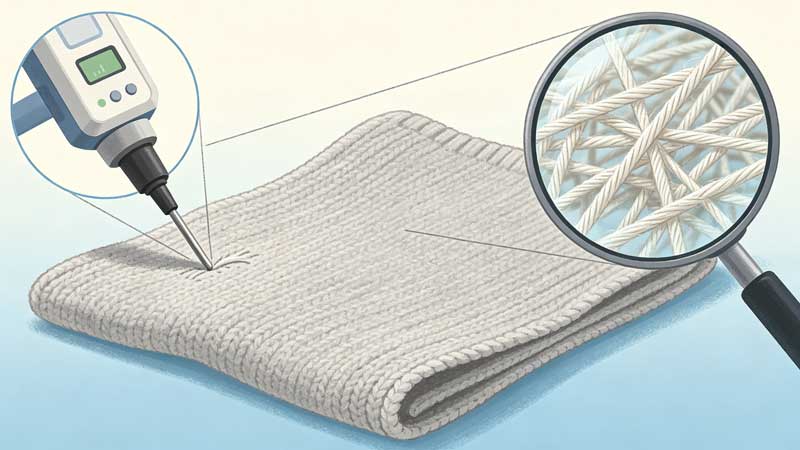
China’s GB 18401 “National General Safety Technical Code for Textile Products” is the mandatory safety standard for all textiles sold in China, including imported clothing, home textiles, and accessories. Despite its long implementation history, a significant percentage of foreign-manufactured textiles fail GB 18401 tests – especially during random customs inspections or market surveillance. According to SAMR data, the most frequent failures involve formaldehyde, pH value, colorfastness, and prohibited azo dyes. Understanding the top reasons for GB 18401 test failure allows manufacturers, sourcing agents, and importers to design and produce textiles that pass on the first attempt. This guide breaks down the most common failure modes and provides actionable prevention strategies.
1. Formaldehyde Content Exceedance – The Most Common Chemical Failure
Formaldehyde is widely used in textile finishing (e.g., crease resistance, anti‑shrink, stiffening finishes). Under GB 18401, formaldehyde limits are:
- Class A (infants): ≤ 20 mg/kg
- Class B (direct contact): ≤ 75 mg/kg
- Class C (non-direct contact): ≤ 300 mg/kg
Failures are most common in Class A and Class B products. Causes include: excessive use of formaldehyde‑based finishing agents (e.g., N‑methylol compounds), insufficient post‑washing or curing, and low‑quality resins.
Prevention: Use low‑formaldehyde or formaldehyde‑free finishing agents. Implement strict process control – ensure proper curing temperature and time. Wash finished goods with warm water and non‑formaldehyde washing agents. Test each batch before shipment using a CNAS‑accredited lab.
2. pH Value Out of Range – Common for Reactive Dyed Fabrics
Textiles undergo scouring, bleaching, and dyeing, often leaving alkaline residues. GB 18401 requires:
- Class A: pH 4.0 – 7.5
- Class B: pH 4.0 – 8.5
- Class C: pH 4.0 – 9.0
Failures occur when pH is above the upper limit (especially common for dark‑dyed fabrics that require higher alkali levels).
Prevention: After dyeing, perform thorough neutralization and washing. Use acidic acid or buffer systems for final rinse. Test pH at multiple stages – after dyeing, after finishing, and after final wash. For infant products, aim for pH 5.5 – 7.0 to add a safety margin.
3. Colorfastness Failures – Perspiration, Rubbing, Water, and Saliva
Colorfastness tests simulate real‑life conditions (sweat, friction, washing, water, and saliva for infant products). Failure modes include staining of adjacent fabric or color change of the test specimen. Common causes:
- Insufficient dye fixation (especially for reactive or direct dyes).
- Poor wash‑off after dyeing – unfixed dye residues.
- Use of low‑quality dyes or improper dye selection for fiber type.
- Inadequate fading prevention for dark colors.
Prevention: Choose high‑quality dyes matched to fiber type. Optimize fixation conditions (temperature, time, auxiliaries). Perform thorough soaping and rinsing after dyeing. Test colorfastness to perspiration and rubbing on a pre‑shipment sample – especially for dark shades and blended fabrics.
4. Prohibited Azo Dyes – Carcinogenic Aromatic Amines
Under GB 18401, certain azo dyes that can reductively cleave to release carcinogenic aromatic amines are strictly prohibited. The current limit for each banned aromatic amine is ≤20 mg/kg. As of the proposed amendment (still in discussion), the list will expand from 23 to 24 amines by adding 4‑aminoazobenzene.
Failures often occur when:
- The textile uses low‑cost azo dyes from unverified suppliers.
- Recycled or reprocessed fibers contain prohibited dyes from previous lifecycles.
- Impurities in raw materials (e.g., aromatic amine intermediates) are present.
Prevention: Source all dyes and pigments from certified suppliers who provide GB 18401‑compliant test reports. Request a certificate of analysis (COA) for each dye batch. Conduct random screening tests on finished fabrics. For infant and children‘s clothing, strictly enforce a “no azo dye” policy across the entire supply chain.
5. Odor Defects – Residual Chemical or Musty Smells
GB 18401 requires textiles to have no offensive odor. Common problematic odors include:
- Moldy/musty odor – due to improper drying or storage in humid conditions.
- Fishy or amine odor – residual amines from dyeing or finishing.
- Petroleum or solvent odor – improper cleaning agents.
Prevention: Ensure proper drying after wet processing – avoid over‑piling damp fabrics. Use good ventilation in storage and shipping containers. Conduct a “sniff test” by trained quality control personnel before packing.
6. Labeling and Safety Category Mismatch
Even if textile products pass chemical tests, incorrect labeling causes GB 18401 non‑compliance and customs rejection. Common errors:
- Missing safety category (A/B/C) on label – mandatory under GB 18401.
- Wrong classification – e.g., labeling an infant product as Class B.
- Product standard number missing or outdated.
- Fiber content mismatch with test results.
Prevention: Design labels to include the safety category, product standard, and fiber content. For infant products (up to 36 months), the label must explicitly state “Class A” and comply with GB 31701 additional requirements. Ensure the label text is in simplified Chinese.
7. Real‑World Example: Formaldehyde in Non‑Iron Shirts
A European brand imported a batch of “easy‑care” cotton shirts for adults. The shirts passed a self‑conducted screening but were randomly selected for customs inspection. The GB 18401 test revealed formaldehyde content of 180 mg/kg – exceeding the Class B limit of 75 mg/kg. The reason: the fabric finishing used a high‑concentration dimethylol dihydroxyethyleneurea (DMDHEU) resin without adequate post‑cure washing. The entire container was held for three weeks, costing $12,000 in storage and re‑processing fees. Lesson: always test finished goods after all finishing steps, not just at the fabric stage.
8. Pre‑Submission Compliance Checklist for Imported Textiles
- [ ] Formaldehyde: test results ≤20 (Class A) / ≤75 (Class B) / ≤300 (Class C).
- [ ] pH: within 4.0–7.5 (A) / 4.0–8.5 (B) / 4.0–9.0 (C).
- [ ] Colorfastness to perspiration, rubbing, water, and saliva (for infants): minimum grade 3 (or 3‑4 per standard).
- [ ] Azo dyes: no detectable prohibited aromatic amines (>20 mg/kg).
- [ ] Odor: no offensive smell (mold, fishy, or chemical).
- [ ] Label: includes product name, manufacturer, importer (China agent), size, fiber content, safety category (A/B/C), product standard number, care instructions, and origin.
- [ ] For infant products: label must state “Class A” and “Infant Textile Product”. Durable label placed away from skin contact.
- [ ] All tests performed by a CNAS‑accredited lab within 12 months of shipment.
- [ ] Test reports and label images consistent with customs declaration.
Summary: Top reasons for GB 18401 test failure – formaldehyde exceedance, pH imbalance, poor colorfastness, banned azo dyes, odor defects, and labeling errors – are all preventable with proper material sourcing, process control, and pre‑shipment testing. By following the pre‑submission checklist and working with CNAS‑accredited labs, foreign manufacturers and importers can achieve first‑time compliance, avoid costly customs holds and market recalls, and ensure the safety of textiles sold in China. Early investment in compliance pays for itself many times over.