
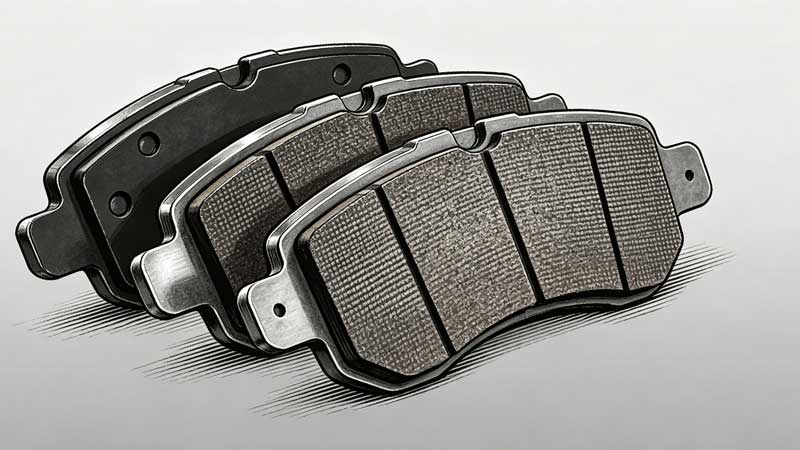
For brake pad manufacturers and importers serving the Chinese automotive aftermarket and OEM supply chain, the regulatory landscape has fundamentally changed. GB 5763-2018 “Brake Linings for Automobiles”, the mandatory national standard that replaced GB 5763-2008, has been fully integrated into China‘s CCC certification framework. With 2026 marking a pivotal enforcement year for the transition from self-declaration to full third-party certification, understanding the technical requirements of the revised standard is essential for maintaining market access. This guide provides a comprehensive overview of the major changes introduced by GB 5763-2018, its impact on product testing and certification, and the critical compliance deadlines for brake pad importers.
1. Evolution of GB 5763: From 2008 to 2018 Edition
China‘s brake pad safety standard has undergone a multi-stage evolution since its inception. GB 5763-2008 was the baseline standard that introduced shear strength, thermal expansion rate, and other performance indicators[reference:0]. However, the 2008 edition only designated certain clauses (specifically 5.3 on friction performance and 5.4 on shear strength) as mandatory, while the remaining provisions—such as appearance quality, dimensional deviation, impact strength, thermal expansion rate, and compression strain—were merely recommended. This created inconsistencies in market enforcement and left quality gaps that affected overall product safety[reference:1].
The landmark revision GB 5763-2018, published on November 19, 2018, and implemented on October 1, 2019, fundamentally transformed the regulatory landscape. The updated standard introduced three major changes: it changed the standard attribute from “partial mandatory” to “full mandatory”; revised the classification system; and amended the technical content[reference:2]. The full mandatory status means that every clause of GB 5763-2018 is now legally enforceable—manufacturers and importers must satisfy every provision.
2. Scope of GB 5763-2018: Covered Vehicles and Product Classification
GB 5763-2018 applies to all brake linings used on automobiles. However, the new standard departed from the previous classification system, which categorized brake pads into four classes based on material and construction. The 2018 edition revamped the classification to align with downstream industry standards, grouping linings by vehicle type in accordance with GB/T 15089 (Classification of Motor Vehicles and Trailers). Under the new classification, brake linings are divided into three categories based on the vehicle type they serve[reference:3].
The 2018 version changed the classification to M-class (passenger vehicles for the transport of passengers), N-class (cargo vehicles for the transport of goods), and O-class (trailers). This alignment with international classification systems helps manufacturers target the correct product category and facilitates cross‑jurisdictional compliance.
Based on the sampling principles outlined in the 2026 market supervision guidelines, GB 5763-2018 further divides brake linings into three specific product categories: drum brake linings for M₁, M₂, N₁, O₁, O₂ class vehicles, drum brake linings for M₃, N₂, N₃, O₃, O₄ class vehicles, and disc brake linings for all applicable categories[reference:4]. Each category has distinct technical requirements, and importers must ensure their products comply with the specific category standards applicable to their target vehicle types.
3. Deleted Non‑Essential Requirements: Focus on Safety and Health
A significant simplification under GB 5763-2018 was the deletion of non‑essential requirements from the 2008 edition. The new standard removed “appearance quality,” “dimensional deviation,” “impact strength,” “thermal expansion rate,” and “compression strain” from its mandatory scope. These non‑critical requirements were moved into recommended national standards specific to disc and drum brake linings, which are currently under development[reference:5]. The deletion of these provisions is designed to reduce the regulatory compliance burden on manufacturers while maintaining robust oversight of true safety and health parameters. By focusing on friction performance, shear strength, and hazardous substance limits, the GB 5763 series aligns more closely with the essential safety attributes that directly impact vehicle braking performance and occupant protection.
4. Friction Performance Testing: Full Shift from Constant Speed to Drag (KRAUSS) Method
The most technically consequential change in GB 5763-2018 is the complete replacement of the friction performance testing method. Under the old GB 5763-2008, friction coefficient was evaluated using a constant speed friction tester (usually a Chase machine), which measured the friction coefficient at specified temperatures under fixed pressure and rotational speed conditions. Specifically, the 2008 method involved testing two 25 mm×25 mm samples under fixed pressure and fixed rotational speed, measuring friction coefficients at 100 °C, 150 °C, 200 °C, 250 °C, and 300 °C during both heating and cooling phases. The constant speed approach, while simple, did not fully simulate the dynamic, high‑energy braking conditions encountered in real‑world driving.
GB 5763-2018 adopted the internationally accepted drag test method (also known as the KRAUSS test), which is widely used in European brake pad homologation under ECE R90 Appendix 9. The new method uses specialized drag testing equipment (also called a KRAUSS test rig) that applies either constant pressure or constant torque, operates at an increased rotational speed of 660 rpm (compared to 500 rpm under the old method), and allows for original sample or sampling methods[reference:7]. The new friction performance test is conducted on an inertia dynamometer, which simulates different initial speeds, braking pressures, and temperatures across multiple braking cycles. The recorded friction coefficient data is then plotted against a temperature curve to assess stability[reference:9].
5. Friction Coefficient Labeling: From “Designated” to “Set” Friction Coefficient
As a direct result of the testing method change, GB 5763-2018 also revised the labeling requirements for friction coefficient values. Under the 2008 standard, brake pads were required to display a “designated friction coefficient” (指定摩擦系数), which indicated the target friction coefficient for the product based on constant speed testing. Under GB 5763-2018, the label must now display the “set friction coefficient” (设定摩擦系数), which can be expressed in four different test configurations.
By the Chinese standard expression convention, the “set friction coefficient” labeling comprises a two‑letter prefix followed by a numeric value. The first letter indicates whether the test used an original sample (“P”) or a sampled test piece (“S”). The second letter indicates whether the test was conducted under constant pressure (“A”) or constant torque (“M”). Thus, the four permissible expressions are PA, PS, MA, and MS, each followed by the numeric friction coefficient value (e.g., PA0.35). This labeling change ensures that downstream customers can accurately interpret the friction characteristics of the brake pad based on the specific test conditions used to qualify the product.
6. Friction Coefficient Limit and Stability Criteria
GB 5763-2018 establishes quantitative criteria for friction coefficient values and stability. Under the 2018 standard, the working friction coefficient (μ) must be within the set friction coefficient ±15%. To account for high‑temperature braking scenarios, the standard focuses on the “friction coefficient stability” metric, which assesses the smoothness of the friction coefficient curve as it varies with temperature and the overall magnitude of fluctuations within the allowable tolerance band[reference:11].
Qualified products must pass a “standardized stress test,” ensuring that the friction coefficient remains within the prescribed range across the entire operating temperature spectrum. Friction performance testing under GB 5763-2018 includes multiple brake applications under varying conditions to identify potential issues such as thermal decay, which can cause a sudden drop in braking force during high‑temperature braking events, or friction coefficient overshoot, which can result in unpredictable brake response[reference:12].
7. Shear Strength Testing: Ensuring Adhesive Integrity
Shear strength is a mandatory test under GB 5763-2018, as it measures the adhesive bond between the friction material and the steel back plate. Shear strength testing is conducted according to GB/T 22309-2023 (Road vehicles – Brake linings – Shear test procedure for disc brake pad and drum brake shoe assemblies)[reference:13]. The test measures the force required to shear the friction material from the backing plate, simulating the extreme forces exerted during emergency braking.
The standard requires that brake pads maintain sufficient shear strength to prevent the friction material from separating from the backing plate under high‑stress conditions. According to market supervision data, shear strength non‑compliance remains one of the most common reasons for brake pad quality failures. The adhesion can be compromised by improper surface preparation of the metal backing plate, inadequate adhesive application, or insufficient curing cycles. Importers and manufacturers should conduct routine shear strength tests on representative samples to ensure that the bond interface remains consistent across production batches[reference:14].
8. Hazardous Substance Requirements: Asbestos Ban and Heavy Metal Limits
GB 5763-2018 introduced stringent limits for hazardous substances, significantly enhancing environmental and health protections. The standard explicitly bans the use of asbestos, a known carcinogen historically used in friction materials, in any brake pad intended for sale in the Chinese market. Additionally, the standard imposes concentration limits on certain heavy metals, including lead (Pb), cadmium (Cd), and chromium VI (Cr VI), each of which is restricted to levels that do not exceed the environmental safety thresholds[reference:15]. The inclusion of these hazardous substance limits aligns GB 5763-2018 with international best practices, such as the EU‘s Restriction of Hazardous Substances (RoHS) directives and the U.S. Environmental Protection Agency’s Lead-Based Paint Program.
It is important to note that the “harmful substance limit” requirements reference foreign international standards, including ECE R13 (for commercial vehicle braking systems), SAE J866-2012 (Friction Coefficient Classification and Environmental Marking for Automotive Brake Linings), and older versions of the Commercial Vehicle Braking System standards. These cross‑references demonstrate China‘s commitment to harmonizing its domestic brake pad standards with globally recognized norms. Importers should obtain a third-party chemical analysis report to confirm the absence of restricted substances. Laboratory testing must quantify the total concentration of each restricted substance per the analytical methods specified in the standard[reference:16].
9. Copper Content Limits (≤5%) and Emerging Regulatory Trends
The 2026 regulatory landscape for brake pads has introduced an additional environmental requirement: copper (Cu) content must not exceed 5% of the total composition. This restriction is part of a broader effort to reduce copper runoff into waterways, addressing concerns about aquatic toxicity. The automotive industry has been transitioning toward low‑copper or copper‑free friction materials, and China’s adoption of this limit aligns with similar regulations in the United States (Washington State and California copper brake pad laws). Importers should review their product formulations and may need to reformulate friction materials that exceed the 5% copper limit[reference:17].
The push for low‑copper and hazardous substance‑free friction materials is part of the industry’s three‑part transformation strategy. The upcoming GB 21670-2025 national safety standard for passenger car braking systems, effective January 1, 2026, imposes additional requirements on braking system design and testing. While GB 21670 applies to vehicle-level braking system integration, its supplementary clauses directly affect how brake pads are evaluated in conjunction with electronic braking components such as anti‑lock braking systems and electronic stability programs[reference:18].
10. Current Enforcement Status: GB 5763-2018 is the Only Acceptable Standard
Despite the 2019 implementation date, confusion persists among certain importers about whether GB 5763-2008 can still be used for CCC certification or as a basis for product compliance declarations. This is an important clarification: GB 5763-2008 has been completely replaced by GB 5763-2018. Effective from October 1, 2019, the old standard ceased to be valid for any purpose. Any brake pad product imported into China or manufactured domestically after that date must comply exclusively with GB 5763-2018.
There is no “overlapping validity period” for the two standards. All CCC certification applications for brake pads, including those submitted during the 2026 transition window, must cite GB 5763-2018 as the applicable standard. Brake pads tested only to GB 5763-2008 (e.g., using constant speed friction test methods) will not be accepted by CCC certification bodies, regardless of their compliance with non‑standard self‑declarations.
Market supervision authorities have been conducting quality supervision sampling campaigns for brake pad products sold in China. The 2026 random inspection rules explicitly reference GB 5763-2018 as the mandatory standard. The sampling guidelines also apply to GB 5763-2018 group lot principles, meaning that the inspector’s determination of an acceptable batch size and the number of units to be sampled is governed by the 2018 standard, not the older 2008 edition[reference:19]. Any discrepancy between a product‘s claimed standard and the actual test methods used during the supervision audit will result in a non‑compliance finding.
11. CCC Certification for Brake Pads: From Self‑Declaration to Third‑Party Certification (2026 Transition)
Brake pads were officially added to the CCC mandatory certification catalog. Until the regulatory changes announced in late 2025, brake pads could be certified using a “supplier‘s declaration of conformity” (SDOC) model rather than third‑party certification. Under the SDOC system, manufacturers self‑declared that their products met the relevant standards, and the government relied on market supervision sampling for verification.
Effective July 1, 2026, specified certification bodies began accepting third‑party CCC certification applications for brake pads. The self‑declaration system no longer accepts new self‑declarations for brake pads from that date forward[reference:20]. By December 31, 2026, all manufacturers and importers of brake pads must complete the conversion from self‑declaration to a full CCC certificate and must proactively cancel any self‑declarations that remain on file. Beginning January 1, 2027, brake pads that do not hold a valid CCC certificate and bear the CCC mark cannot be manufactured, imported, sold, or used in any other business activity[reference:21][reference:22].
The designated certification bodies (including CQC and CCAP) have issued specific implementation rules for brake pad CCC certification. The certification model generally consists of product type testing + initial factory inspection + post‑certification surveillance. The type testing must be conducted by a CNAS‑accredited laboratory with experience in GB 5763-2018 testing, covering friction performance (drag method), shear strength, and hazardous substance analysis. The factory inspection focuses on production consistency, traceability of critical components (friction material formula, mixing records, press parameters, post‑curing data), and the manufacturer‘s internal quality management system.
However, the regulation includes an important exception. Products manufactured within the validity period of a self‑declaration and no longer being produced are not required to convert their certificates and may continue to be sold[reference:23]. This grandfather clause protects existing stock that was lawfully manufactured but does not exempt current production from the new certification requirements.
12. Practical Compliance Roadmap for Brake Pad Importers
To achieve full compliance with GB 5763-2018 and CCC certification deadlines, foreign brake pad manufacturers and importers should follow this five‑phase plan:
- Product re‑testing (Months 1-3): If your brake pads have only been tested under GB 5763-2008 (constant speed method) or if your friction coefficient reports are based on older test standards, you must retest your entire product portfolio under GB 5763-2018. Engage a CNAS‑accredited laboratory to conduct the full battery of tests: friction performance (drag method), shear strength (per GB/T 22309), and hazardous substance analysis (asbestos, lead, cadmium, chromium VI). For copper content, ensure the concentration does not exceed 5%. Retain the raw test data, equipment calibration records, and sample batch information.
- CCC application preparation (Month 4): If your product currently relies on a self‑declaration, begin assembling the full CCC application dossier. Required documents include the GB 5763-2018 test reports, factory quality management documentation (including ISO 9001 or IATF 16949 certifications, if available), product specifications and assembly drawings, critical component traceability logs, and a completed CCC application form (submitted through a designated certification body such as CQC or CCAP).
- Factory inspection (Month 5-6): Schedule an initial factory inspection. Inspectors will evaluate production consistency, traceability of friction material batches, quality control records (incoming inspection of raw materials, in‑process checks, final testing), and calibration of test equipment. If the factory holds ISO 9001 or IATF 16949 certification, it may streamline the process but does not replace the CCC factory audit.
- Certificate conversion (By December 31, 2026): Submit the application to a designated certification body. Request that the certification body accept your existing self‑declaration test results where permissible to expedite conversion. Once the CCC certificate is issued, cancel your self‑declaration on the official system. If the certificate is not issued before the cutoff date, your products will be ineligible for import after January 1, 2027.
- Labeling and documentation update (By December 31, 2026): After obtaining CCC certification, update your product labels and packaging to include the CCC mark. Ensure that the label displays the “set friction coefficient” (using PA, PS, MA, or MS prefix) and includes the CCC certificate number. The label must be in simplified Chinese and durable for the expected product life.
Products that are not compliant by the deadline will be subject to customs holds, forced destruction, or return at the importer’s expense.
Summary: GB 5763-2018 is the only mandatory national standard for brake pads (brake linings) in China, fully replacing GB 5763-2008 since October 1, 2019. The updated standard introduced fundamental changes: full mandatory status, deletion of non‑essential requirements (appearance, dimensional deviation, impact strength, thermal expansion, compression strain), a new friction coefficient testing method using the drag (KRAUSS) test instead of constant speed, revised classification aligned with vehicle types, new “set friction coefficient” labeling (PA, PS, MA, MS), strict limits on hazardous substances (asbestos banned; lead, cadmium, chromium VI restricted), and a ≤5% copper content limit. In 2026, brake pads are transitioning from self‑declaration to third‑party CCC certification, with mandatory third‑party applications starting July 1, 2026, certificate conversion required by December 31, 2026, and full enforcement from January 1, 2027. Importers must retest all products under GB 5763-2018, update CCC certificates, implement the new labeling, and meet the hazardous substance limits. Those who act promptly will secure uninterrupted market access; those who delay risk rejected shipments, financial penalties, and exclusion from China‘s vast automotive parts market.