
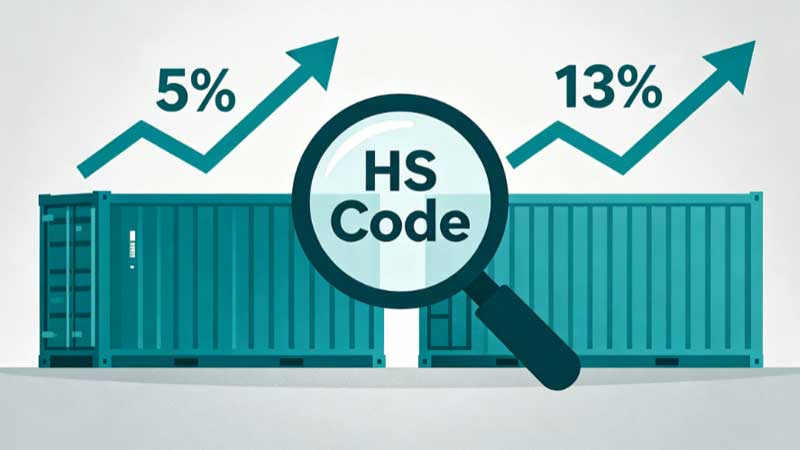
A Shenzhen-based electronics manufacturer increased its annual export tax rebate by RMB 780,000 simply by correcting the HS codes used for its exported electronic components. The company had been declaring its products under a general HS code with a 5% rebate rate for three years. After a compliance audit, a customs broker reclassified the products under a more specific HS code eligible for a 13% rebate. This case study explains the classification process, evidence required, and practical lessons for exporters seeking to maximize VAT refunds.
1. The Problem: Generic HS Code with 5% Rebate Rate
The manufacturer produced specialized electronic control modules used in industrial automation equipment. For three years, the company declared its exports under HS code 8537.1090 (Other control panels with voltage ≤1,000V). This generic code carried an export tax rebate rate of only 5%. The company exported approximately RMB 13 million worth of these modules annually, receiving RMB 650,000 in rebates. Neither the finance team nor the customs broker had questioned the classification, assuming it was correct.
2. The Discovery – Compliance Audit Identifies Misclassification
During a routine internal compliance audit, the company‘s tax advisor noticed that the product’s technical specifications – programmable logic capability, communication interfaces (RS‑485, Ethernet), and use in industrial automation – suggested eligibility for a more specific HS code: 8537.1091 (Programmable controllers). This code, designed for PLCs and industrial control modules, carried a 13% export rebate rate. The advisor also confirmed that the product met the customs classification criteria for this subheading based on the Harmonized System Explanatory Notes.
3. The Reclassification Process – Evidence and Approval
The company worked with a licensed customs broker to file a formal HS code reclassification request with the local customs authority. The evidence package included:
- Product technical specifications: Detailed description of programmable logic, memory capacity, I/O points, and communication protocols.
- Product catalog and user manual: Showing the product‘s intended use in industrial automation and control systems.
- Previous customs declarations (past 3 years): Listing the generic HS code used.
- Supporting letter from the manufacturer: Certifying that the product had not changed since the original classification.
- Broker’s classification opinion: Citing the relevant HS explanatory notes and customs rulings for similar products.
The customs authority approved the reclassification within 20 working days. The decision applied retrospectively to exports in the current fiscal year only (not previous years). The company was required to use the new HS code for all future declarations.
4. The Financial Impact – RMB 780,000 Annual Increase
After reclassification, the company‘s effective rebate rate increased from 5% to 13% – a 160% increase. With annual exports of RMB 13 million, the rebate calculation changed as follows:
- Before (5% rate): RMB 13,000,000 × 5% = RMB 650,000 annually.
- After (13% rate): RMB 13,000,000 × 13% = RMB 1,690,000 annually.
- Annual increase: RMB 1,040,000 additional rebate. However, because the reclassification applied only to the current year (not retroactive), the first‑year gain was approximately RMB 780,000 (pro‑rated for months remaining in the year).
In the first full year after reclassification, the company received an additional RMB 1.04 million in export rebates – directly improving net profit by the same amount.
5. Lessons Learned – Key Takeaways for Exporters
This case study highlights several critical lessons for exporters seeking to maximize VAT refunds:
- Don‘t assume generic HS codes are correct. Generic codes often carry lower rebate rates. Always check for more specific subheadings that match your product’s technical characteristics.
- Review HS codes annually or after product updates. Product specifications may change, or customs may issue new classification rulings that affect your products.
- Engage a specialized customs broker or tax advisor. Professional classification services pay for themselves many times over in increased rebates.
- Document product specifications thoroughly. Maintain a technical file with schematics, user manuals, and functional descriptions to support classification.
- Act quickly when a misclassification is found. Retroactive claims are limited to the current fiscal year; prior years cannot be corrected.
6. Practical Steps to Optimize Your HS Code Classification
To avoid leaving money on the table, follow this five‑step roadmap:
- Conduct a product classification audit (Immediate). Review all exported products against the current HS code catalogue. Flag products declared under generic codes (e.g., ending in “90” or “99”) for deeper review.
- Compare technical specifications with HS explanatory notes. For each product, determine if a more specific subheading exists. Pay attention to product features (programmable logic, communication interfaces, material composition).
- Request a binding classification ruling (For ambiguous products). Submit a formal request to customs with product samples and technical documentation. The ruling is binding for 3 years.
- Amend future declarations and claim retroactive rebate (Current year only). Once the correct HS code is confirmed, update your ERP and customs filing systems. File amended VAT rebate claims for the current fiscal year.
- Train finance and logistics teams (Ongoing). Ensure staff responsible for customs declarations understand the importance of HS code accuracy and the potential rebate impact.
Summary: A Shenzhen electronics manufacturer increased its annual export tax rebate from 5% to 13% – an additional RMB 780,000 in the first year – simply by correcting its HS code classification from a generic “other control panels” code to the specific “programmable controllers” subheading. The reclassification required a formal customs application with technical documentation and a broker‘s opinion. Key lessons: generic HS codes often carry lower rebate rates; regular classification audits are essential; professional classification services offer high ROI; retroactive claims are limited to the current fiscal year. By following the practical steps outlined – conducting audits, comparing specifications with explanatory notes, and training staff – exporters can maximize VAT refunds and improve net profitability.