
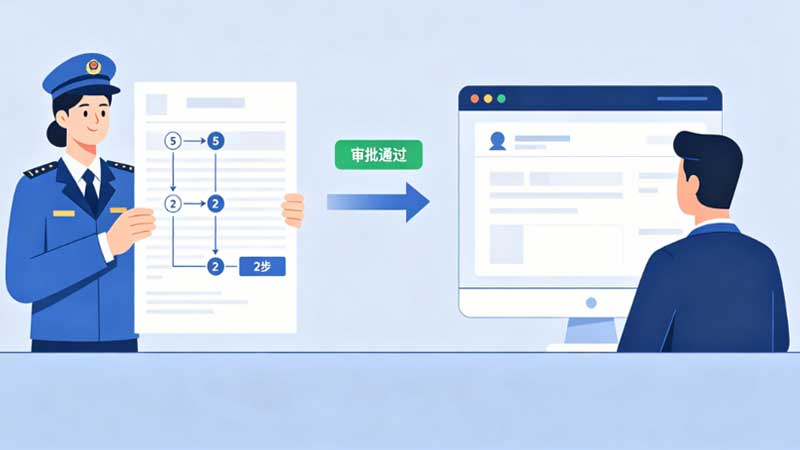
Since 2026, wholly foreign-owned enterprises (WFOEs) and general rate taxpayers in China have witnessed a significant acceleration in invoice limit increase approvals. Under the newly digitized invoice management system, the tax authority has shifted invoice limit administration from a largely manual, document‑intensive process to a fully online, risk‑based dynamic mechanism. Key reforms have been implemented under the unified electronic tax bureau platform: full online application with no paper submission, automatic temporary limit increases triggered at the 80% usage threshold, a dedicated green channel for high‑credit enterprises (A/B‑rated) compressing approval to a single day in many cases, and the complete elimination of pre‑paid VAT requirements for D‑rated enterprises. For foreign‑invested enterprises managing high‑value transactions, bulk contract execution, or seasonal sales surges, understanding these streamlined invoice limit increase procedures is essential to avoid cash flow disruptions and maintain customer relationships. This guide provides a comprehensive overview of the 2026 invoice limit increase rules, the new approval workflow, expedited processing pathways, and a practical compliance roadmap for foreign‑invested enterprises.
📑 What You'll Learn
- Full online, paperless application process for invoice limit increases
- Automatic temporary adjustment at 80% usage threshold (up to 20%‑50% increase)
- Green channel for high‑credit enterprises with approval in 2‑3 days
- No pre‑paid VAT for D‑rated applicants (effective from January 1, 2026)
- Four dynamic adjustment mechanisms under the digital invoice system
- Same‑day approvals for A/B‑rated manufacturers in pilot regions
- Whitelist auto‑increases without materials for qualifying enterprises
- Practical compliance roadmap for foreign‑invested enterprises
1. Full Digitalization: Online, Paperless Invoice Limit Increase Applications
Since the full rollout of the unified electronic tax bureau (e‑Tax) platform across all provinces in early 2026, applying for an invoice limit increase has become a fully digital, paperless process. The traditional requirement for physical document submission and in‑person service hall visits has been eliminated for the vast majority of cases. Under the current system, a taxpayer logs into the e‑Tax portal with its corporate digital certificate, completes identity verification, and navigates to the “发票额度调整申请” (Invoice Limit Adjustment Application) module via “发票使用” (Invoice Use). The applicant selects either a “长期” (long‑term) or “短期” (short‑term) adjustment type, enters the requested amount and the business justification, uploads supporting documents (such as contracts, purchase orders, or shipping confirmations), and submits the application.
The entire process is online, and supporting documents can be attached in electronic format without paper copies. After submission, the system automatically accepts the application and initiates the review process. The applicant can track the processing status in real time. Once approved, the increased limit is applied immediately. For high‑volume enterprises, this eliminates the previous delays caused by queueing and manual data entry. The system now also integrates with the national contract and logistics databases, allowing the tax authority to cross‑check the submitted business justification against the enterprise‘s actual transaction records. When an enterprise‘s business justifications and supporting materials align with its historical transaction patterns, the automated system can approve the application in as little as a single business day.
2. Automatic Temporary Increase at 80% Usage Threshold
The most significant reform for 2026 is the introduction of an automatic temporary adjustment mechanism for high‑credit enterprises. Under the fully digitalized invoice system, a taxpayer‘s invoice total limit is determined through four dynamic methods: month‑begin automatic adjustment, temporary automatic adjustment, periodic automatic adjustment, and manual adjustment.
Automatic Temporary Increase (“赋额临时调整”): This is the most operationally beneficial change. For taxpayers with good credit standing, when the cumulative amount of invoices issued in the current month reaches a certain percentage of the month‘s total limit, the e‑Tax platform automatically triggers a risk scan. If no risk issues are detected, the system automatically increases the month‘s invoice limit. Based on the pilot results, as of 2026, the trigger threshold is set at 80% of the month’s total limit, and the system can temporarily increase the limit by 20% to 50% depending on the enterprise‘s risk classification. For a general‑rate taxpayer in the white‑list risk category (IV类), the system automatically adds 50% to the monthly limit without any human intervention. This automatic mechanism is particularly valuable for WFOEs with lumpy, high‑value single transactions, such as a large equipment sale or a bulk shipment that would otherwise exceed the existing limit after the 80% threshold is crossed.
Month‑Begin Automatic Adjustment (“月初赋额调整”): On the first day of each month, the system automatically recalibrates the invoice limit for the upcoming month based on the enterprise‘s credit rating, tax payment compliance, and the transaction volume of the preceding 12 months. An A‑rated enterprise may receive a month‑begin limit 20% higher than a B‑rated enterprise with otherwise identical revenue history, reflecting the tax authority’s updated risk‑based approach to limit management. This month‑begin adjustment serves as the baseline for the temporary, in‑month increases triggered by actual usage.
3. Green Channel for High‑Credit Enterprises: Approval in 2‑3 Days
Under the 2026 “便民春风行动” (Convenience for the People Spring Action), the tax authority has established a dedicated green channel for high‑credit enterprises. For enterprises with an A or B tax credit rating, the average processing time for manual invoice limit increase applications has been compressed to 2‑3 working days. In many local pilot programs, such as in Ningguo City, the implementation of a “集体审议+容缺审核” (collective review + tolerance‑based approval) model has reduced the business acceptance period from one working day to less than half an hour, achieving same‑day approval and real‑time credit availability. This accelerated processing allows high‑credit WFOEs to respond to unexpected spikes in sales orders without having to wait weeks for approval. The green channel is supported by automated document verification: where an enterprise has already supplied a given document in a previous application or in its annual tax filing, the system will automatically retrieve the stored document rather than requiring a fresh upload. The tax authority has explicitly stated that it must not request duplicate supporting materials from taxpayers, ensuring that applications are not delayed by redundant paperwork. The green channel is available for both digital e‑invoices and traditional paper invoices, as the approval is based on the taxpayer‘s identity and credit rating, not on the invoice format.
4. No Pre‑paid VAT for D‑rated Applicants (Effective January 1, 2026)
Historically, enterprises with D‑grade tax credit ratings were sometimes required to pre‑pay estimated VAT before applying for invoice limit increases, creating cash flow constraints. Effective January 1, 2026, this requirement has been removed. Under the new rules, D‑rated taxpayers are not required to pre‑pay VAT when applying for invoice limit increases. For a D‑rated enterprise, the removal of the pre‑payment condition is a significant operational relief, as it means that a low credit rating no longer forces a cash prepayment that could strain limited liquidity. However, D‑rated enterprises are still subject to enhanced monitoring, and any increase in invoice limit may be accompanied by tighter scrutiny of underlying business contracts. The application process itself is the same as for other enterprises: online submission through the e‑Tax portal with supporting documentation. The D‑rating does not prevent approval, but it does require the applicant to provide more detailed evidence of the underlying bona fide transaction than would be required for an A‑rated entity. Importantly, this change applies only to the application itself — if a D‑rated enterprise has outstanding tax arrears, those must still be resolved before approval can be granted.
5. Whitelist Auto‑increase Without Materials for Qualified Enterprises
For enterprises meeting the highest credit standards, the 2026 framework introduces a “whitelist” auto‑increase mechanism. Under this system, eligible enterprises that satisfy a set of cumulative conditions are automatically enrolled in the whitelist. The system then monitors the enterprise‘s actual invoice usage against its month‑begin limit. When the usage exceeds 80% of the allocated limit, the system automatically increases the limit without requiring the enterprise to submit any additional supporting materials — the limit increase is processed in the same manner as the automatic temporary adjustment, but for whitelisted enterprises, the increase is automatically classified as a permanent (or semi‑permanent) adjustment rather than a temporary one. The entry conditions include: A or B tax credit rating for two consecutive years; no outstanding taxes; no major tax violation records; and a 100% timely filing record for both VAT and corporate income tax returns over the preceding 12 months. However, if the registered business address differs from the actual operating address, or if the legal representative is listed on a serious untrustworthy list, the enterprise may be excluded from the whitelist even if the credit rating conditions are satisfied. Once admitted, the whitelist status is reviewed periodically, with the possibility of removal if the compliance conditions are subsequently breached.
6. Expedited Processes for High‑Value, High‑Volume Applications
Even with streamlined procedures, certain high‑value applications (for example, a general taxpayer requesting a limit increase of more than RMB 1 million in a single month) may trigger additional approval levels. Under the 2026 rules, the tax authority has adopted a multi‑tiered approval process that depends on the requested amount and the applicant‘s risk profile. For a general taxpayer applying for an increase of up to RMB 1 million, the approval is handled by the local tax bureau’s general administrative team. For amounts between RMB 1 million and RMB 2 million, a collective review by the tax bureau‘s leadership is required before final approval. For applications exceeding RMB 2 million, the approval must be reviewed and signed off by the district‑level tax authority. Even in these high‑value cases, however, the review is streamlined. The e‑Tax portal automatically notifies the applicant of the expected timeline, and the reviewing authority must complete its review within the statutory window (generally 10 working days for amounts above RMB 100,000). In practice, the processing time for high‑value applications has been reduced from a previous average of 15‑20 days to 7‑10 days, reflecting the system‘s increased digitization and the reduced need for manual document handling. To expedite a high‑value application, the submitting WFOE should ensure that its supporting documents (contracts, purchase orders, bank payment confirmations) are complete and that the business justification is clearly stated.
7. Practical Compliance Roadmap for Foreign‑Invested Enterprises
To obtain rapid approval of invoice limit increase applications and avoid unnecessary delays, foreign‑invested enterprises should follow this six‑step compliance roadmap:
- Maintain A or B tax credit rating (Ongoing): Proactively file all monthly VAT returns, quarterly CIT prepayments, and the annual CIT reconciliation by the statutory deadlines. Avoid any late payments or under‑reporting that could trigger a downgrade. An A‑rated enterprise receives priority green‑channel processing; a B‑rated enterprise is also eligible, but an enterprise rated C or D will face additional verification steps.
- Prepare supporting documents in advance (Ongoing): For each anticipated invoice limit increase application, keep digital copies of the relevant sales contracts, purchase orders, shipping confirmations, and bank payment records. The e‑Tax portal supports PDF, JPEG, and PNG formats. Uploaded documents must be clearly legible; blurry or incomplete scans may be rejected.
- Apply online via the e‑Tax portal as soon as the need arises (Immediate): Do not wait until the existing limit is exhausted. The system can approve a “短期” (short‑term) increase within the same month, but it is prudent to apply before the 80% usage threshold is reached so that the approval can be processed in parallel with ongoing operations. Use the “发票额度调整申请” module.
- For urgent seasonal needs, apply for a permanent limit increase (周期性调整): If your WFOE‘s sales volume has permanently grown, request a permanent recalibration of your month‑begin limit rather than relying on monthly temporary adjustments. A permanent limit increase will prevent the need to apply for a temporary adjustment each month.
- Take advantage of the 80% automatic trigger (Ongoing): For high‑credit enterprises, the system‘s automatic temporary increase at 80% usage can provide an instant buffer. However, the automatic increase is temporary and applies only to the current month. For sustained growth, submit a manual application for a permanent increase.
- Respond promptly to system alerts or verification requests (Immediate): If the e‑Tax portal issues a risk alert or requests additional documentation, respond within the specified timeframe (usually 2‑3 working days). Ignoring an alert will cause the application to be stalled, and the enterprise may be subject to further manual investigation.
For foreign‑invested enterprises with frequent large‑value transactions, such as machinery exporters or bulk commodity traders, it is advisable to request a higher permanent month‑begin limit during the annual tax registration filing, supported by evidence of the prior year‘s sales volume. This proactive adjustment is often faster than waiting for the system’s month‑begin automatic recalibration.
Summary: In 2026, the tax authority has streamlined invoice limit increase approvals through full digitalization, automatic temporary increases at the 80% usage threshold, a green channel for high‑credit enterprises (2‑3 days), and the elimination of pre‑paid VAT for D‑rated applicants. The four dynamic adjustment mechanisms — month‑begin automatic adjustment, temporary automatic adjustment, periodic automatic adjustment, and manual application — together provide flexible pathways for WFOEs and general taxpayers to obtain higher limits. The system‘s risk‑based approach means that A‑ and B‑rated enterprises enjoy the fastest processing, with many applications approved in 2‑3 working days (and sometimes the same day in pilot regions). Whitelist enterprises may receive automatic increases without submitting additional materials when their usage reaches the 80% trigger. For D‑rated enterprises, the removal of the pre‑paid VAT requirement is a meaningful operational relief, although they are still subject to enhanced review. Foreign‑invested enterprises can ensure rapid approval by maintaining a high tax credit rating, preparing supporting documents in advance, applying online through the e‑Tax portal promptly, and responding to any system alerts without delay. With the 2026 digital framework, invoice limit approval no longer causes significant business interruptions — it has become a predictable, fast, and fully transparent process.