
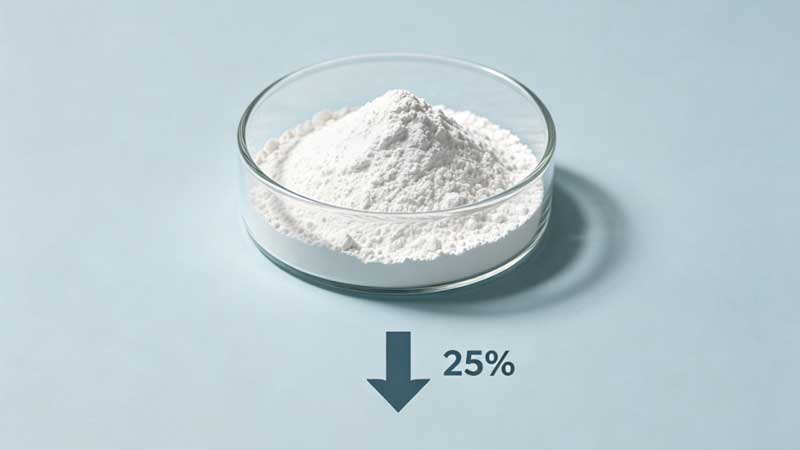
Lithium carbonate prices have dropped 25% from their 2025 peaks, creating a strategic opportunity for EV battery manufacturers, cathode producers, and downstream users to build inventory ahead of Q2-Q3 production needs. The price decline, from approximately 320,000 RMB/ton in early 2025 to 240,000 RMB/ton in Q2 2026, is driven by global oversupply as new mining projects in Australia, Africa, and South America come online while EV demand growth moderates. Market analysts recommend a buying window in Q2 2026 before seasonal demand picks up in H2. This report analyzes the 25% lithium carbonate price drop, the oversupply dynamics affecting EV battery material prices, the recommended buying window for Q2-Q3 production needs, inventory strategy considerations, and price outlook for the remainder of 2026.
1. Lithium Carbonate Prices Drop 25% – Market Overview
Lithium carbonate prices have dropped 25% from their previous cycle peak, creating the most favorable buying conditions for battery material purchasers since 2023. The price decline reflects a fundamental shift from the severe shortage of 2021-2023 to a balanced-to-surplus market in 2025-2026.
Key price data:
- Current price (battery-grade lithium carbonate, June 2026): 240,000-255,000 RMB/ton ($33,000-35,000/ton) – down from 320,000-340,000 RMB/ton peak in early 2025.
- Percentage decline: 25-28% from peak. Some lower-grade technical lithium carbonate has dropped 30-32%.
- Price trend trajectory: 2023 peak: 600,000 RMB/ton → 2024 average: 400,000 RMB/ton → 2025 peak: 340,000 RMB/ton → current: 250,000 RMB/ton.
- Current price vs. pre-surge (2020): Still elevated (2020 average was 50,000 RMB/ton). Current prices are 5x pre-surge levels but down significantly from 2023 highs.
- Spot vs. contract pricing: Spot prices have dropped faster than long-term contract prices (which typically lag by 1-2 quarters). Some contract buyers are renegotiating or delaying offtake agreements.
- Recent weekly movement: Prices stable to slightly downward over past 4 weeks (-3% total). No sharp drop expected in immediate term – suggesting current level may be bottom or near-bottom.
For battery manufacturers and cathode producers, the 25% price drop translates to significant cost savings. Lithium carbonate typically represents 30-40% of cathode material cost and 15-25% of finished battery cell cost. A 25% reduction in lithium price reduces cell costs by approximately 4-6%.
2. EV Battery Material Oversupply – Drivers of Price Decline
The 25% drop in lithium carbonate prices is driven by EV battery material oversupply across the lithium supply chain. Several structural factors have shifted the market from shortage to surplus:
- New mine production ramping up (Australia, Africa, South America): Australian spodumene production expanded 35% in 2025 with new mines at Pilgangoora, Wodgina, and Kathleen Valley. African production (Zimbabwe, Mali, Ghana) has grown from near-zero in 2022 to 15% of global supply. South American brine operations (Chile, Argentina) added 40,000 tons LCE capacity in 2025-2026.
- Chinese lepidolite (domestic mica) production holding steady: Despite environmental pressures and higher production costs (180,000-220,000 RMB/ton cost curve), Chinese lepidolite operations continue producing, adding to oversupply at current price levels (which remain above their breakeven).
- EV demand growth moderating: Global EV sales growth slowed from 35% in 2023 to 22% in 2025 to projected 18% in 2026. China's NEV penetration rate reached 45% in Q1 2026 – approaching saturation in some segments. Moderate demand growth cannot absorb rapid supply expansion.
- Battery cathode inventory destocking: Cathode manufacturers and battery makers built significant lithium inventories during 2023-2024 shortages. These inventories are now being worked down, reducing spot market buying pressure.
- LFP (lithium iron phosphate) chemistry efficiency gains: LFP batteries now use 10-15% less lithium per kWh than designs from 2021-2022, reducing lithium intensity of EV battery production.
- Recycling volume growth: Lithium recovered from end-of-life batteries and production scrap reached 15,000 tons LCE in 2025 – projected 25,000 tons in 2026, offsetting some primary demand.
The supply-demand balance shifted from a 50,000-ton deficit in 2023 to a 30,000-40,000-ton surplus in 2025. 2026 is projected at 40,000-60,000-ton surplus, keeping downward pressure on prices through mid-year.
3. Recommended Buying Window – Q2 2026 for Q2-Q3 Production Needs
Market analysts and industry consultants recommend a buying window in Q2 2026 (April-June) for battery manufacturers and cathode producers to build inventory ahead of Q2-Q3 production needs. Several factors support this timing:
- Prices near cost support levels: Current lithium carbonate prices (240-255k RMB/ton) are approaching the cash cost curve of marginal producers (200-220k RMB/ton for Chinese lepidolite, 180-200k RMB/ton for Australian spodumene). Further sharp price declines are unlikely as high-cost producers reduce output at prices below breakeven.
- Seasonal demand pickup expected H2 2026: EV sales typically strengthen in Q3-Q4 (new models, year-end promotions). Battery makers begin restocking for H2 production in Q3 (July-August). Buying in Q2 captures lower prices before seasonal demand increases.
- Producer inventory overhang being worked down: Lithium miners and refiners built significant inventories during 2025 oversupply. These are being sold into the market now at competitive prices. Once inventories normalize, price discounting may decrease.
- No major supply disruptions on horizon: No significant production cuts announced despite lower prices. African and Australian operations continue ramping. Unlike 2022-2023, no mine closures or force majeure events are anticipated in Q2-Q3 2026.
- RMB/USD exchange rate stabilization: After volatility in 2024-2025, the RMB has stabilized, reducing currency-driven price uncertainty for international buyers.
Specific recommended buying actions by product type and timeline:
- Battery-grade lithium carbonate (for NCM/LFP cathodes): Build 2-3 months of inventory in May-June 2026. Target price range: 235-250k RMB/ton. Avoid buying above 265k RMB/ton.
- Lithium hydroxide (for high-nickel NCM): Follow similar timeline but maintain slightly lower inventory (1-2 months) given NCM demand growth slower than LFP.
- Spodumene concentrate (for integrated producers): Consider long-term contracts at current prices or spot purchases below $800/ton (vs. $1,200+ in 2023).
- Technical-grade lithium carbonate (for glass, ceramics, greases): Lower urgency but opportunistically build 1-2 months inventory at current discounts (30%+ from peak).
4. Price Outlook – Q3-Q4 2026 and Beyond
Understanding the price outlook helps buyers decide whether to build inventory now or wait for further declines. Most analysts project a range-bound to modestly recovering market in H2 2026.
Forecast by quarter:
- Q2 2026 (current): 230-255k RMB/ton. Seasonal softness continues. Best buying window.
- Q3 2026: 240-270k RMB/ton. Gradual pickup as battery makers begin restocking for H2 EV production. Downside limited by cost support.
- Q4 2026: 250-285k RMB/ton. Potential upside if EV sales exceed expectations (especially China NEV subsidies extending).
- 2027 outlook: Range 240-300k RMB/ton. New supply continues (Africa, Argentina) but demand may accelerate with new EV models and energy storage growth. Unlikely to return to 2023 peaks.
Key variables that could change price trajectory:
- Downside risks (lower prices): EV demand miss (sub-15% growth), faster African mine ramp-up, China lepidolite production remaining high despite environmental costs, continued recycling volume growth. Could push prices to 200-220k RMB/ton.
- Upside risks (higher prices): EV demand beat (25%+ growth), production cuts by high-cost producers (especially Chinese lepidolite), supply disruptions (geopolitical, weather, operational), energy storage demand surge (solar+battery projects accelerating). Could push prices back to 300-320k RMB/ton.
- Most likely scenario (70% probability): Prices bottom in Q2-Q3 2026 around 230-240k RMB/ton, gradually recover to 250-270k RMB/ton by year-end. No sharp rebound but floor established.
For buyers, the risk of waiting for lower prices is that seasonal restocking in Q3 could push prices up 10-15% from Q2 lows. The risk of buying now is limited further downside of 5-10% if oversupply persists through H2.
5. Comparison – Current Lithium Prices vs Historical Peaks and Lows
To contextualize the opportunity created by the 25% price drop, compare current lithium carbonate prices against historical benchmarks:
- All-time peak (November 2022): 600,000 RMB/ton – Current price is 58-60% below peak.
- 2023 average: 450,000 RMB/ton – Current price is 44-47% below 2023 average.
- 2024 average: 380,000 RMB/ton – Current price is 33-37% below 2024 average.
- 2025 peak (early 2025): 340,000 RMB/ton – Current price is 25-28% below 2025 peak (this is the drop covered in this report).
- Pre-surge average (2020): 50,000 RMB/ton – Current price is 5x pre-surge levels. Lithium remains historically expensive despite recent declines.
- Production cost support (marginal lepidolite): 200-220k RMB/ton – Current price is 10-25% above cost support. Further decline possible but limited.
- Long-term sustainable price (industry consensus): 150-200k RMB/ton (2030+). Current prices still above long-term equilibrium as market transitions from shortage to normalcy.
For battery manufacturers, the current price represents a significant discount from recent years but still elevated compared to pre-2021 levels. The decision to build inventory should balance immediate cost savings against long-term price trend expectations.
6. Inventory Strategy – How Much to Build and When
For battery manufacturers and cathode producers considering the opportunity to build inventory during the 25% lithium price drop, several inventory strategy factors should be considered:
Recommended inventory levels by buyer type:
- Large battery manufacturers (50GWh+ annual production): Maintain 2-3 months of lithium carbonate inventory in normal conditions. Consider expanding to 4 months during current buying window (May-June 2026). Maximum recommended: 5 months (risk of price decline and storage costs).
- Mid-sized battery producers (10-50 GWh): Normal 1.5-2 months inventory. Consider expanding to 2.5-3 months. Limited storage capacity may constrain build.
- Cathode material manufacturers: Normal 1-1.5 months inventory. Consider expanding to 2-2.5 months. Cathode producers face lower storage constraints but higher raw material cost pass-through to customers.
- Trading companies and distributors: Opportunistic buying for inventory. Higher risk tolerance. Consider 3-6 months inventory if price outlook favorable. Be prepared to hold through potential Q3 weakness.
Implementation timeline for inventory build:
- April-May 2026: Begin spot purchases at 240-250k RMB/ton. Secure 50% of target inventory. Use smaller lot sizes to test price direction.
- May-June 2026: Accelerate purchases if prices hold or dip below 240k. Complete 80-100% of target inventory by end of June.
- July-August 2026: Stop purchases. Monitor Q3 demand indicators. Restart only if prices unexpectedly drop below 230k.
- September-December 2026: Draw down inventory for production. No additional build unless prices drop significantly.
Risk management considerations:
- Storage costs and handling: Lithium carbonate requires dry, humidity-controlled storage. Factor storage costs (20-50 RMB/ton/month) into inventory economics.
- Quality degradation over time: Lithium carbonate is stable but can absorb moisture if packaging compromised. Ensure supplier packaging quality (vacuum-sealed, desiccant).
- Price risk hedging: Consider futures/derivatives on Guangzhou Futures Exchange (lithium carbonate futures launched 2023). Hedge portion of inventory to lock in buying price gains.
7. Comparison – Lithium vs Other Battery Material Price Trends
Lithium carbonate's 25% price drop contrasts with other EV battery materials. Understanding relative price movements helps with holistic procurement strategy:
- Lithium carbonate: -25% from 2025 peak. Driven by oversupply from new mines. Recommended: build inventory.
- Cobalt (sulfate): -15% from 2025 peak. Demand constraints (LFP batteries gaining share over NCM, reducing cobalt intensity). Oversupply continues. Recommended: maintain normal inventory, no build needed.
- Nickel (sulfate): -10% from 2025 peak. Driven by Indonesian supply growth. NCM battery demand moderate. Recommended: normal inventory levels.
- Graphite (anode material): -5% from 2025 peak. Stable market with China controlling 70%+ of supply. Some export restrictions but no major price swings. Recommended: normal inventory.
- Copper foil: +8% from 2025 peak (copper price driven by global demand). Upward pressure. Recommended: consider building copper foil inventory or locking in long-term contracts.
- Separators and electrolytes: Stable to -5%. Not commodity-driven like lithium. Supply adequate. Recommended: normal procurement.
Lithium is the battery material with the most favorable current pricing dynamics for inventory build. Other materials offer modest or no price advantage currently.
8. Practical Roadmap for Buyers – Capitalizing on the Lithium Price Drop
For procurement professionals and supply chain managers seeking to capitalize on the 25% lithium carbonate price drop, follow this six-step roadmap:
- Confirm your Q2-Q3 2026 lithium requirements (Immediate). Calculate your production needs (in tons LCE) for July-December 2026. Factor any production volume changes (planned expansions, new lines, or slowdowns).
- Assess current inventory levels and storage capacity (Immediate). Determine how much additional lithium can be stored without disrupting operations or incurring high storage costs. Identify any quality degradation risks for extended storage.
- Set target price bands and volume triggers (By April 30).
- Aggressive target: Buy at 230-240k RMB/ton (2-3 months inventory).
- Conservative target: Buy at 240-250k RMB/ton (1-2 months inventory).
- Stop-buy trigger: Prices above 265k RMB/ton.
- Qualify alternative suppliers (May 2026). Current low prices offer opportunity to test new lithium sources (new mines, emerging producers, recycling suppliers). Qualify 1-2 backup suppliers during the buying window.
- Execute spot purchases and negotiate contract re-openers (May-June 2026). For spot purchases, target 2-3 lots of 50-200 tons each to average price risk. For long-term contracts, request price renegotiation or deferred delivery of higher-priced contracted volumes.
- Monitor market indicators and adjust strategy (Ongoing). Track weekly lithium carbonate spot prices (Asian Metal, Fastmarkets, SMM). Watch EV sales data (China Passenger Car Association). Set price alerts for 220k (opportunity to buy more) and 280k (signal to stop buying).
For battery manufacturers, the 25% price drop represents a potential 2-5% reduction in total battery pack cost. A timely inventory build can lock in these savings for Q3-Q4 production.
9. Frequently Asked Questions – Lithium Carbonate Price Drop
Q: Will lithium prices drop further? Should I wait to buy?
A: Further modest decline (to 220-230k RMB/ton) is possible but not certain. The risk of waiting is that seasonal restocking in Q3 could push prices back toward 260-280k. Buying now at 240-250k locks in 25% savings from peak. If you have storage capacity, buy 50-70% of target now and 30-50% in June if prices trend lower.
Q: How long will the current low-price window last?
A: Analysts expect favorable pricing through Q2 2026 (April-June). By Q3, seasonal EV demand pickup and restocking may push prices up 10-15%. The buying window is approximately 60-90 days from mid-April to mid-July 2026.
Q: Should I renegotiate existing long-term lithium contracts?
A: Yes, if your contracts have quarterly or semi-annual price adjustment mechanisms. Many lithium offtake agreements reference market prices (e.g., average of prior 3 months). Request accelerated price adjustment or temporary delivery deferrals if contract prices are significantly above current spot.
Q: What is the cost structure of lithium production? At what price do mines shut down?
A: Production costs vary: South American brine (lowest): $3,000-5,000/ton LCE (22-36k RMB/ton). Australian spodumene: $6,000-8,000/ton (44-58k RMB/ton). African spodumene: $7,000-9,000/ton (51-66k RMB/ton). Chinese lepidolite (highest): $15,000-18,000/ton (110-130k RMB/ton). Current prices are well above all production costs, so no major supply shut-downs expected. "Cost support" refers to marginal producer willingness to invest in expansion – not current production.
Q: Is lithium carbonate quality consistent across suppliers? What should I check?
A: Quality varies significantly. Battery-grade requirements: minimum 99.5% Li2CO3, controlled impurities (Na, K, Ca, Mg, Fe, Cl, SO4). Chinese domestic production sometimes has higher impurity variability than South American or Australian product. For inventory build, verify supplier specifications, request certificate of analysis for each batch, and consider independent third-party testing for large purchases.
Q: How does the lithium price drop affect LFP vs. NCM battery economics?
A: LFP batteries use lithium carbonate directly (more lithium per kWh than NCM). NCM batteries use lithium hydroxide (which prices correlate with carbonate but less tightly). The 25% lithium drop benefits LFP more than NCM, further reinforcing LFP's cost advantage. Expect continued LFP market share gains in EVs and energy storage.
Summary: Lithium carbonate prices have dropped 25% from 2025 peaks to 240-255k RMB/ton ($33-35k/ton) due to EV battery material oversupply, creating a recommended buying window in Q2 2026 for battery manufacturers and cathode producers to build inventory ahead of Q2-Q3 production needs. The price decline is driven by global oversupply as new mining projects in Australia (+35% production), Africa (now 15% of global supply), and South America (+40,000 tons LCE capacity) come online while EV demand growth moderates from 35% (2023) to 18% (2026 projected). The market has shifted from a 50,000-ton deficit in 2023 to a 40,000-60,000-ton surplus in 2026. Current prices are 58% below the all-time peak (600k RMB/ton in November 2022), 44-47% below 2023 average, and 25-28% below the 2025 peak. Recommended buying window is Q2 2026 (April-June) when prices are near cost support levels (marginal Chinese lepidolite at 200-220k RMB/ton) and before seasonal demand pickup in H2. For battery-grade lithium carbonate, analysts recommend building 2-3 months of inventory in May-June at target prices of 235-250k RMB/ton. Price outlook: Q2 (230-255k), Q3 (240-270k), Q4 (250-285k). Most likely scenario (70% probability) sees prices bottoming in Q2-Q3 at 230-240k, then gradually recovering to 250-270k by year-end. Inventory strategy varies by buyer size: large battery makers (50GWh+) should expand from 2-3 months normal to 4 months; mid-sized from 1.5-2 to 2.5-3 months; cathode makers from 1-1.5 to 2-2.5 months. Implementation timeline: April-May secure 50% of target inventory at 240-250k, May-June complete 80-100%, July-August stop purchases and monitor, September-December draw down inventory. Compared to other battery materials, lithium offers the most favorable current pricing dynamics: cobalt -15%, nickel -10%, graphite -5%, while copper foil has increased +8%. For buyers, the roadmap includes confirming Q2-Q3 requirements, assessing storage capacity, setting price bands (aggressive 230-240k, conservative 240-250k, stop at 265k), qualifying alternative suppliers, executing spot purchases in May-June, and monitoring weekly prices and EV sales data. The 25% lithium price drop translates to a 4-6% reduction in battery cell costs – a significant opportunity for manufacturers to lock in savings ahead of H2 2026 production.