
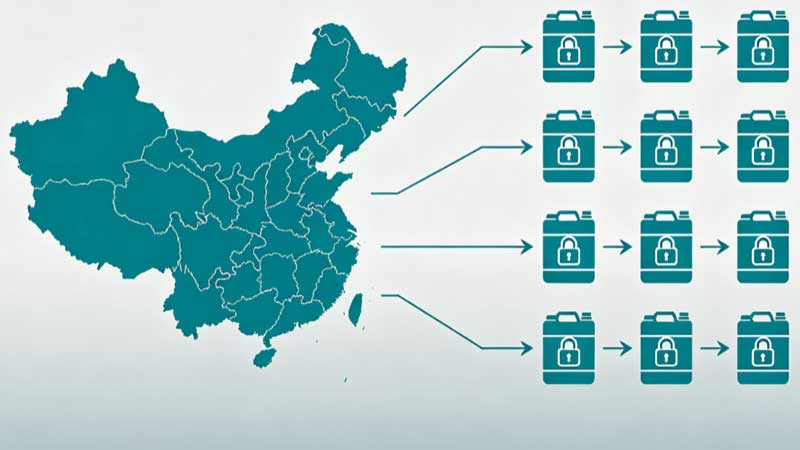
The Ministry of Ecology and Environment (MEE), jointly with the Ministry of Commerce and the General Administration of Customs, has added 15 new precursor chemicals to China‘s controlled import list, effective April 1, 2026. The new additions primarily target fentanyl‑related substances and their precursors, as well as several synthetic drug intermediates. Importers must now obtain an import license from MEE before customs clearance. This guide explains the new controlled substances, the import license application process, and compliance requirements for chemical importers.
1. New Controlled Precursor Chemicals – 15 Substances Added
The 2026 MEE Announcement No. 8 adds 15 precursor chemicals to the “Catalogue of Precursor Chemicals Subject to Import/Export License Administration.” Key additions include:
- Fentanyl-related substances: 4‑ANPP (4‑anilino‑N‑phenethylpiperidine), norfentanyl, benzylfentanyl, and other synthetic opioid intermediates.
- Precursor chemicals for synthetic drugs: Methylamine derivatives, phenylacetamide derivatives, and specific organophosphorus compounds.
- Additional psychotropic substance precursors: Chemicals used in the synthesis of MDMA, ketamine analogues, and amphetamine‑type stimulants.
These substances are now subject to the same import licensing regime as previously listed precursor chemicals. Importing any of these 15 substances without a valid MEE license is prohibited, and shipments will be detained or seized by customs.
2. Import License Application Process
The import license application is submitted to the Ministry of Ecology and Environment through the online “Chemical Import License Application System” (https://chemimport.mee.gov.cn). Steps:
- Register as an importer: Foreign companies must appoint a China‑based agent with a valid business license and chemical import qualification.
- Prepare documents: Completed application form, end‑use certificate (stating the intended use and that the chemicals will not be used for illicit drug production), supplier contract, and safety data sheet (SDS) in Chinese.
- Submit online: Upload documents and pay the application fee (RMB 500 per substance). Processing takes 10‑15 working days for standard applications.
- License issuance: Electronic license valid for 6 months, renewable once. The license number must be presented to customs at the time of import declaration.
Expedited processing (RMB 1,000 additional fee) reduces time to 5‑7 working days for urgent medical or research purposes.
3. End-Use Certificate Requirements
The end‑use certificate (最终用途证明) is a critical document that must be notarized and legalized. Key requirements:
- Signed by the importer‘s legal representative – wet signature required; electronic signatures not accepted.
- Notarized and legalized (or apostille) – For Hague Convention countries, apostille is sufficient; for non‑Hague countries, consular legalization required.
- Specify exact end‑use – e.g., “for pharmaceutical research in licensed laboratory” rather than generic “industrial use.”
- Prohibition on re‑export or resale – Certificate must state that chemicals will not be transferred to third parties without MEE approval.
False or misleading end‑use certificates can result in criminal prosecution under China‘s Anti-Drug Law and Chemical Control Regulations.
4. Penalties for Non‑Compliance
Importing controlled precursor chemicals without a license or violating license terms carries severe penalties:
- Customs detention and seizure: Shipments will be detained; chemicals may be destroyed at importer’s expense.
- Administrative fines: RMB 500,000 to RMB 5 million, depending on quantity and severity.
- Blacklisting: Importer added to MEE‘s “Untrustworthy Entity List,” prohibiting future chemical imports for 1‑5 years.
- Criminal liability: For intentional smuggling or diversion to illicit drug production, individuals may face imprisonment of 5‑15 years under the Criminal Code.
MEE shares violation data with customs, tax authorities, and the Anti‑Drug Commission. A violation can affect a company’s entire China import-export operations.
5. Practical Compliance Roadmap for Importers
To ensure compliance with the new precursor chemical import license requirements, follow this five‑step roadmap:
- Review your chemical portfolio (Immediate). Check if any imported chemicals fall under the 15 newly added substances or mixtures containing them.
- Engage a China agent (If not already). Foreign importers without a China entity must appoint a local agent with chemical import qualifications.
- Prepare end‑use certificates in advance (Month 1). Draft the EUC, obtain notarization and legalization (allow 2‑4 weeks).
- Submit license application before ordering (Month 2). File at least 30‑45 days before the planned shipment date to allow processing time.
- Maintain records for 5 years. Retain all licenses, EUCs, and shipping documents for MEE audit.
Summary: China has added 15 new precursor chemicals, primarily fentanyl‑related substances, to the controlled import license list effective April 1, 2026. Importers must obtain an MEE import license before customs clearance, submit a notarized end‑use certificate, and comply with post‑import reporting. Processing takes 10‑15 working days (5‑7 days expedited). Penalties include fines up to RMB 5 million, blacklisting, and criminal liability for diversion to illicit drug production. By reviewing chemical portfolios, engaging a China agent, preparing EUCs in advance, and filing early, importers can navigate the expanded controls and avoid severe penalties.