
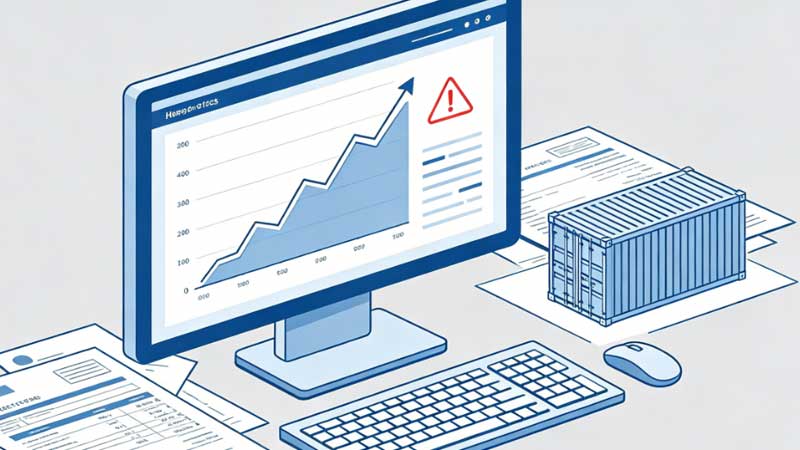
Valuation disputes are rising sharply in 2026 as China Customs (GAC) deploys a new AI-powered big data system to detect under-invoicing. The system automatically compares declared values against industry averages, historical transaction data, and international benchmark prices. When a declared value falls outside the normal range (typically below the 10th percentile or above the 90th percentile for a given HS code), the shipment is flagged for automatic inspection. For importers, this means that under‑declared shipments – whether intentional or accidental – are now detected with much higher accuracy. Proper valuation documentation (commercial invoices, bank payment records, contracts) is now more critical than ever to avoid costly delays, fines, and potential criminal liability. This guide explains how the AI system works, common valuation errors, and practical steps for compliance.
1. How the AI Valuation System Works – Big Data Comparison
GAC‘s new valuation system, deployed in March 2026, uses machine learning to analyze millions of import declarations in real time. Key components:
- HS code‑specific price databases: For each 10‑digit HS code, the system maintains a dynamic database of declared values from all importers over the preceding 24 months. The database is updated daily.
- Benchmark price ranges: The system calculates the 10th, 25th, 50th, 75th, and 90th percentiles of declared values for each HS code. Values below the 10th percentile (suspiciously low) or above the 90th percentile (suspiciously high) are automatically flagged.
- Peer comparison: The system compares each importer‘s declared values against those of similar importers (by region, importer size, and product type). Significant deviations trigger alerts.
- Historical trend analysis: For each importer, the system tracks price trends over time. A sudden drop of 30% or more in declared value without a valid explanation (e.g., change in supplier, product specification) triggers review.
- External price benchmarks: The system references international commodity prices, manufacturer‘s suggested retail prices (MSRP), and third‑party pricing databases (e.g., Platts, ICIS) for certain products.
When a shipment is flagged, customs officers initiate a valuation review. The importer has 10 working days to submit supporting documentation justifying the declared value.
2. Common Valuation Errors – What Triggers Inspections
Based on GAC enforcement data, the following errors are most likely to trigger valuation disputes:
- Incorrect deduction of royalties or license fees (35% of disputes): Importers deducting royalties or license fees from the transaction value without proper justification or without including them in the customs value as required.
- Related‑party transactions (25%): Transactions between related companies (e.g., parent‑subsidiary) where the declared value is lower than the price charged to unrelated buyers. Customs may apply transfer pricing adjustments.
- Missing or incomplete supporting documents (15%): Commercial invoice without a detailed breakdown (unit price, quantity, discounts), missing bank payment records, or unsigned contracts.
- Exclusion of assists (10%): Failing to include the value of assists – tools, dies, molds, or engineering work provided by the buyer to the seller at no or reduced cost.
- Failure to declare post‑importation adjustments (10%): Not reporting subsequent price increases or decreases (e.g., retroactive discounts, price escalations) to customs.
- Simple under‑declaration (5%): Intentionally declaring a lower value to reduce duties and taxes – the most serious violation.
Once a shipment is flagged, the importer bears the burden of proof to demonstrate that the declared value is correct.
3. Red Flags – What Customs Looks For
Customs officers are trained to look for specific red flags that indicate potential under‑invoicing:
- Declared value significantly below industry average: If most importers declare $10 per unit and you declare $3 per unit, expect a review.
- Sudden price drop from previous shipments: A 40% price decrease from your own historical declarations without a change in supplier or product specifications.
- Price not aligned with market trends: Declaring stable prices while international commodity prices have risen sharply.
- Vague product descriptions: “Electronic components” without specifying model, brand, or specifications – makes valuation comparison difficult.
- Related‑party transactions without transfer pricing documentation: No evidence that the related‑party price is at arm‘s length.
- Cash payments or payments to third parties: Payments not made directly to the supplier or using non‑traceable methods.
If multiple red flags are present, customs may escalate the review to a full valuation audit, examining the importer‘s books and records.
4. Consequences of Under-Valuation – Fines and Criminal Liability
Valuation violations carry serious penalties under China‘s Customs Law and Tax Collection Law:
- Adjustment of declared value: Customs will re‑assess the value using alternative methods (e.g., identical goods, similar goods, deductive value). Additional duties and VAT will be assessed retroactively.
- Late payment surcharges: 0.05% per day on the additional duties and VAT, calculated from the original filing date.
- Administrative fines: RMB 30,000 – RMB 500,000 depending on the amount of underpaid tax (typically 30‑100% of the evaded amount).
- Criminal liability (for intentional under‑declaration): For tax evasion exceeding RMB 100,000, individuals may face imprisonment of 3‑7 years and fines of 100‑500% of evaded tax.
- Blacklisting: The importer may be added to GAC‘s “High‑Risk Importer” list, resulting in 100% inspection for 12‑24 months.
Civil penalties also apply: the importer may be liable to the seller for breach of contract if the under‑declaration was detected and resulted in additional costs.
5. Acceptable Valuation Methods – What Customs Accepts
Under the WTO Customs Valuation Agreement (adopted by China), customs accepts the following valuation methods in order of priority:
- Transaction value (primary method): The price actually paid or payable for the goods, plus adjustments for assists, royalties, and transportation costs (if not already included).
- Transaction value of identical goods: Value of identical goods sold for export to China at the same or similar time.
- Transaction value of similar goods: Value of similar goods (same commercial level, similar characteristics).
- Deductive value: Based on the unit price at which the imported goods are sold in China, minus commissions, profits, and transport costs.
- Computed value: Sum of cost of materials, fabrication, profit, and expenses.
- Fallback method: Reasonable means consistent with WTO principles.
Importers should always use the transaction value method and maintain documentation supporting each element of the price (e.g., supplier quotes, purchase orders, payment records).
6. Documentation Requirements – What to Keep
To defend against valuation disputes, importers should maintain the following documentation for each shipment:
- Commercial invoice: Must include buyer/seller names, invoice date, product description (HS code at 10‑digit level), quantity, unit price, total value, currency, Incoterms, payment terms, and any discounts or rebates.
- Packing list: Detailed list of contents, matching invoice quantities.
- Purchase contract (English and Chinese translation): Signed by both parties. Must specify price, delivery terms, and any royalties or license fees.
- Bank payment record: Swift copy or bank statement showing payment matching the invoice amount. Payments to third parties require explanation.
- Transport documents: Bill of lading or air waybill, showing freight and insurance costs (for CIF shipments).
- Valuation declaration form (if requested): For related‑party transactions, form 2‑01 (Related‑Party Transaction Valuation Declaration).
Documents should be retained for 5 years. Customs may request them during a post‑clearance audit.
7. Practical Compliance Roadmap for Importers
To avoid valuation disputes and penalties, follow this six‑step roadmap:
- Conduct a valuation self‑audit (Immediate). Review your declared values for the past 24 months. Identify any shipments where values were significantly below industry averages or your own historical prices. Prepare justifications.
- Verify product descriptions and HS codes. Ensure that product descriptions are detailed enough for customs to compare prices (e.g., include model numbers, specifications, brand).
- Maintain a price benchmark database. For each HS code, track industry average prices (available from customs brokers or trade data platforms). If your prices are consistently lower, document the reasons (e.g., long‑term contract, volume discount, different quality).
- Prepare transfer pricing documentation for related‑party transactions. If you import from a related company, prepare a transfer pricing study demonstrating that prices are at arm‘s length. Include the study in your customs file.
- Disclose all assists and royalties. Explicitly state in the invoice whether tools, dies, molds, engineering work, or royalties are included or excluded. If excluded, provide the value and basis for exclusion.
- Respond promptly to customs valuation inquiries. If a shipment is flagged, submit supporting documentation within the 10‑working‑day window. Request an extension if needed.
Summary: GAC‘s new AI-powered valuation system automatically flags under‑declared shipments by comparing declared values against industry averages, historical data, and international benchmarks. Flags are triggered when declared values fall below the 10th percentile, show sudden drops, or involve related‑party transactions without documentation. Common valuation errors include incorrect deduction of royalties, related‑party transfer pricing issues, missing assists, and simple under‑declaration. Consequences of under‑valuation include value adjustments, fines up to RMB 500,000, late payment surcharges (0.05% per day), and criminal liability for intentional evasion. To avoid disputes, importers should maintain detailed commercial invoices, purchase contracts, bank payment records, and transfer pricing documentation. By conducting self‑audits, verifying HS code descriptions, preparing benchmarks, and responding promptly to customs inquiries, importers can reduce valuation risk and avoid costly penalties.