
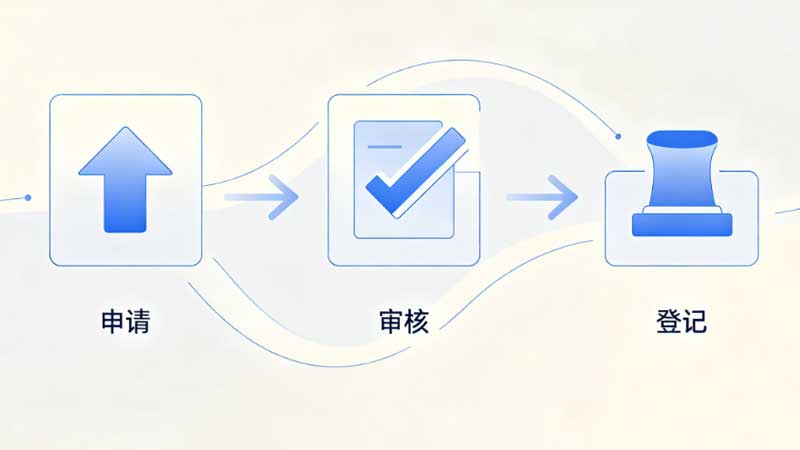
Since the amended PRC Company Law took effect on July 1, 2024, wholly foreign‑owned enterprises (WFOEs) have navigated a transitional period of adjusting their governance structures and capital schedules. As of 2026, the legal framework has further matured, with the State Administration for Market Regulation (SAMR) implementing the 2026‑edition Registration Document and Material Specifications (effective May 1, 2026), which substantially streamline the procedures for amending articles of association and making other corporate changes. For foreign investors, understanding these simplified amendment procedures under the 2026 Company Law framework can significantly reduce administrative burden, accelerate filing timelines, and ensure ongoing compliance. This guide provides a comprehensive overview of the key simplifications, the remaining compliance obligations, and a practical roadmap for WFOEs to implement amendments efficiently.
1. Substantive Simplifications Under the Amended Company Law Framework
The 2024 Company Law amendments introduced several substantive changes that directly affect how WFOEs amend their articles of association and govern their operations. As of 2026, these provisions are fully implemented and form the baseline for all corporate actions.
1.1 Reduced Shareholder Voting Thresholds for Ordinary Resolutions
Under the old law, shareholder voting thresholds for ordinary resolutions were not specified, leaving many WFOEs to set their own supermajority requirements (e.g., 90%) in their articles. This often created deadlocks for routine amendments. The amended Company Law now provides a statutory default: ordinary resolutions require approval by shareholders representing more than half of the voting rights. This change significantly reduces the risk of shareholder deadlock and simplifies the process for making non‑fundamental amendments to the articles of association.
For fundamental matters such as amending the articles of association, increasing or reducing registered capital, merger, division, dissolution, or change of company form, a two‑thirds supermajority remains required. However, many routine changes—such as updating registered address, adjusting business scope, or making non‑material textual corrections—now fall under ordinary resolution thresholds, streamlining the process for WFOEs with multiple foreign shareholders.
1.2 Legal Representative Changes: Breaking the Deadlock
Under the previous regime, changing a legal representative often required the outgoing legal representative to sign the change application – a practical deadlock when a director resigned in disagreement. The amended Company Law has reformed this process. It now allows the company to designate a new legal representative through a valid shareholder resolution, without requiring the cooperation of the outgoing representative. After the change, the company must file the update with SAMR within thirty days.
However, during the period between the legal representative‘s resignation and the completion of the change filing, the company remains liable for any civil acts performed by the outgoing legal representative in the name of the company. The statutory thirty‑day filing window is strictly enforced; failure to complete the change within this period may result in legal disputes and potential liability for the company.
1.3 Board of Directors and Audit Committee Flexibility
The amended law provides greater flexibility in corporate governance structures. For WFOEs that prefer a simplified management structure, a company with a small number of shareholders may appoint a single director instead of a full board. In such cases, the company’s articles must be amended to reflect this streamlined structure. Additionally, companies may now choose to establish an audit committee within the board of directors to exercise the supervisory functions previously performed by a监事 (supervisor) or监事会 (board of supervisors). If a company opts for this structure, the articles must be amended to abolish the监事会 and specify the composition and authority of the audit committee.
Under the 2026 transition rules, companies that simultaneously maintain both an audit committee and a监事会 must elect one as the sole internal supervisory body. This election must be reflected in the articles of association. The relevant filing under the 2026 registration material specifications requires a shareholder resolution to this effect.
2. 2026 SAMR Registration Material Simplifications
Effective May 1, 2026, SAMR introduced new national‑wide registration document and material specifications (the 2026 Edition). These changes fundamentally simplify the paperwork required for amending articles and other corporate changes.
2.1 No Share Transfer Agreement Required for Equity Changes
Under the previous rules, a share transfer agreement was a mandatory submission for any equity change filing. Effective May 1, 2026, the share transfer agreement is no longer required to be submitted to the registration authority. Instead, a valid shareholder resolution, together with the updated shareholder register, suffices. This change is particularly significant for WFOEs that need to transfer equity between foreign parent entities or to new investors, as it eliminates the risk of filing delays due to missing or improperly executed transfer agreements.
2.2 No Physical Chops Required for Application Submissions
Previously, all SAMR application forms required the company’s physical chop for validation. Under the 2026 Edition, this requirement has been relaxed. The application itself no longer requires the company‘s chop. However, internal corporate documents (such as shareholder resolutions and the updated articles themselves) must still be properly executed according to the company’s constitutional documents. The registration authority also retains the power to verify digital identity filings through facial recognition or other electronic confirmation methods.
2.3 Electronic License Retirement and Cross‑Region Migration Simplification
For WFOEs relocating their registered office, the new rules eliminate the need to apply to the original registration authority before filing in the new jurisdiction. The enterprise may directly apply to the new registration authority, which will notify the original authority through a standardized internal process. For changes that require surrender of the old physical business license, the enterprise is not required to return the physical copy; the license can be declared invalid by the registration authority through the National Enterprise Credit Information Publicity System. This substantially reduces administrative friction for WFOEs that change their registered address.
2.4 Digital Identity Verification for Board and Supervisor Appointments
If the identity and appointment of a director, supervisor, or senior manager can be confirmed through the digital identity verification system (facial recognition), the applicant may be exempted from submitting separate appointment documents. This streamlines the filing process for personnel changes that require concurrent amendments to the articles (e.g., changing the composition of the board).
3. Mandatory Shareholder Register Requirement
One of the most significant additions in the 2026 filing framework is the mandatory submission of a shareholder register (股东名册) for several types of changes.
The shareholder register must include the following information: each shareholder‘s name and address; the amount, method, and date of subscribed and paid‑in capital; the certificate number for the capital contribution certificate; and the date of acquisition or loss of shareholder status. For a WFOE, maintaining an accurate and up‑to‑date shareholder register is not only a compliance obligation but also a prerequisite for filing any of the following changes: amendments to the articles of association that affect shareholder rights; increase or decrease of registered capital; change of shareholders (equity transfer); and record‑filing of changes to shareholder认缴出资 amounts.
The shareholder register must be filed even when the change is limited to a simple adjustment of a shareholder‘s认缴出资 period without changing any other article. Under the 2026 rules, this circumstance is specifically provided for: if only the认缴出资 amount or method changes but the registered capital remains unchanged, the applicant must still file the revised articles and the updated shareholder register. Notably, for such changes, no additional shareholder resolution is required – the filing can proceed with the board resolution alone, provided that the resolution is properly executed.
<h2.4 Transitional Compliance: Capital Paid‑In Schedule Amendments
For WFOEs established before July 1, 2024, the most urgent amendment relates to the registered capital认缴 schedule. Under the国务院 provisions on the administration of company registered capital registration, existing companies have a “5+3” transition window.
If a WFOE‘s認缴出资期限, calculated from July 1, 2027, would exceed five years, the company must amend its articles to shorten the remaining认缴出资期限 to five years. This adjustment must be made by June 30, 2027. Once the articles are amended, the company has twenty working days from the date of the amendment to file the change with SAMR. The adjusted final payment date must not be later than June 30, 2032. This timeline is strictly enforced: companies that fail to adjust their认缴出资期限 by June 30, 2027, will have their non‑compliance publicly flagged on the National Enterprise Credit Information Publicity System and may face administrative penalties.
For WFOEs established after July 1, 2024, the認缴出资期限 must be within five years of the date of incorporation. Any extension of this period requires an amendment to the articles of association, which now benefits from the simplified filing procedures described above.
<h2.5 Simplified Equity Transfer Procedures Under Article 84
For WFOEs structured as limited liability companies, the transfer of equity to external parties has been significantly simplified. Under the previous legal framework, a shareholder was required to obtain the consent of a majority of the other shareholders before transferring equity to an outsider, and non‑responding shareholders were deemed to have consented. The amended Company Law (Article 84) has replaced this system with a much simpler mechanism.
The transferor shareholder is now only required to issue a written notice to the other shareholders, specifying the number of shares to be transferred, the price, and the payment terms. The recipient shareholder then has thirty days to exercise a right of first refusal. If the shareholder does not respond within thirty days, they are deemed to have waived their right of first refusal. This “silence means waiver” rule replaces the previous “silence means consent” rule, substantially reducing the risk of deadlock. The notice requirement cannot be avoided, but the standard is lower than the previous consent‑seeking process. This change facilitates equity transfers between foreign parent entities and new investors, making WFOEs more attractive for exit planning.
In practical terms, for an equity transfer, the only new SAMR filing documents required are the written transfer notice (proof of delivery to the other shareholder), the updated shareholder register, and the revised articles (if the articles need to be amended to reflect the new shareholder). The share transfer agreement itself is not required.
<h2.6 Practical Compliance Roadmap for WFOEs in 2026
To navigate the simplified amendment procedures under the 2026 Company Law framework, foreign‑invested WFOEs should follow this six‑step roadmap:
- Conduct an article of association audit (Immediate): Review your current articles of association to identify provisions that conflict with the amended Company Law – such as pre‑2024 shareholder voting thresholds,认缴出资期限 that exceed the five‑year limit, and out‑dated governance structures. This audit is particularly urgent for WFOEs established before July 1, 2024.
- Prioritize capital认缴期限 amendment (By June 30, 2027): If your WFOE‘s认缴出资期限 currently extends beyond June 30, 2032, you must amend the articles to shorten the認缴出资期限 to no later than June 30, 2032. To file this change, prepare a shareholder resolution (two‑thirds majority), the revised articles, and the updated shareholder register. Under the 2026 rules, the shareholder register must include the revised認缴出资 schedule.
- Leverage simplified documentation for equity transfers: For any equity transfer, use the Article 84 written notice procedure. Retain proof of delivery (such as email with a read receipt or signed acknowledgment). The share transfer agreement is no longer required for filing, but it should still be retained for commercial purposes.
- Update governance structure as needed: If you have a small WFOE and wish to abolish the监事会 and replace it with an audit committee, ensure that your articles explicitly state that the audit committee exercises the statutory functions of a监事. The relevant filing requires a shareholder resolution and a revised set of articles. Under the 2026 registration specifications, you must annotate which directors serve on the audit committee in the director filing form.
- Implement digital identity verification: For changes involving director, legal representative, or supervisor appointments, use the SAMR digital identity verification system (facial recognition). If successful, you may be exempted from submitting separate appointment documents.
- File within statutory deadlines: After amending your articles, file the change with SAMR within twenty working days of the effective date of the amendment. For capital schedule adjustments, note that the twenty‑day clock starts ticking from the date the resolution is passed, not from the date the new認缴出资期限 becomes effective. After approval, record the new認缴出资期限 on the shareholder register and update any bank or other third‑party records accordingly.
The amendment process for most routine changes now takes approximately 5‑10 working days from online submission to SAMR approval, significantly faster than the previous 10‑15 working days.
Summary: The 2026 Company Law framework and the 2026 Edition SAMR registration specifications have substantially simplified the procedures for amending the articles of association of wholly foreign‑owned enterprises. Key simplifications include the elimination of the share transfer agreement requirement for equity changes, the removal of physical chops for application submissions, electronic license retirement, digital identity verification for director appointments, and the new default ordinary resolution threshold of “more than half” of voting rights. For equity transfers, the previous “consent of majority” requirement has been replaced by a simple written notice procedure, with non‑responding shareholders deemed to have waived their right of first refusal. The transition rules for capital认缴期限 require existing WFOEs to amend their認缴出资期限 no later than June 30, 2027, with a final payment deadline of June 30, 2032. Shareholder registers are now mandatory for any change affecting shareholder information. WFOEs that conduct an immediate articles audit, leverage digital filing tools, and follow the six‑step roadmap can complete amendments in as little as 5‑10 working days – faster and simpler than at any previous point under China‘s corporate registration framework.