Dangerous Goods Test China | UN38.3, MSDS, Transport Certification & DG Testing Services
Professional dangerous goods test China services for all hazard classes. We provide UN38.3 battery testing, MSDS preparation (Material Safety Data Sheet), dangerous goods transport certification, classification and identification testing for air, sea, rail, and road transport. Our CNAS-accredited laboratory reports comply with IATA DGR, IMDG Code, ADR, and China GAC regulations. Whether you need testing for lithium batteries, chemicals, aerosols, flammable liquids, corrosive substances, or any DG Class 1-9 — we deliver fast, reliable, globally recognized dangerous goods test reports. Ensure safe transport, avoid shipping delays, and meet all regulatory requirements.
⚠️ Request Dangerous Goods Test Quote
What is Dangerous Goods Testing? Why Is It Required?
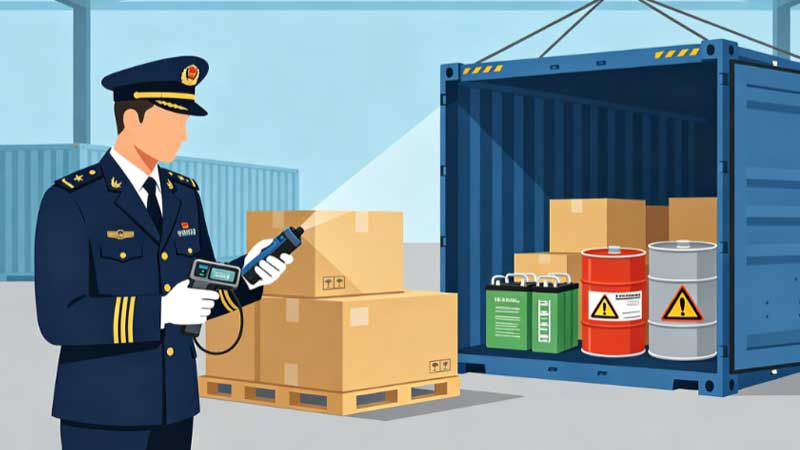
Dangerous goods testing (危险品测试) is mandatory for shipping hazardous materials by air, sea, rail, or road. Carriers (airlines, shipping lines, railways) and customs authorities require certified test reports proving that dangerous goods are properly classified, packaged, and safe for transport. Without valid dangerous goods transport certification, shipments will be rejected by carriers, delayed at ports, or subject to heavy fines. Key regulations include:
- IATA DGR (International Air Transport Association Dangerous Goods Regulations) – for air freight.
- IMDG Code (International Maritime Dangerous Goods Code) – for sea freight.
- ADR (European Agreement concerning the International Carriage of Dangerous Goods by Road) – for road transport.
- China GAC & MOT regulations – for imports/exports through Chinese ports.
- UN38.3 – specific testing standard for lithium batteries and cells.
⚠️ Critical: Shipping dangerous goods without proper test reports and documentation is illegal. Penalties include shipment confiscation, fines up to $50,000+, and criminal liability for serious incidents. Always obtain certified dangerous goods testing before shipping.
Lithium Battery UN38.3 Testing – Complete Guide
UN38.3 testing is mandatory for all lithium batteries and cells shipped by air or sea. The test includes 8 specific tests:
- T1 – Altitude Simulation – Simulates low pressure during air transport.
- T2 – Thermal Test – Assesses battery stability under temperature extremes (-40°C to +75°C).
- T3 – Vibration Test – Simulates vibration during transport.
- T4 – Shock Test – Tests battery resilience against mechanical shock.
- T5 – External Short Circuit – Tests battery response to external short circuit.
- T6 – Impact Test / Crush Test – For cells: impact test; for batteries: crush test.
- T7 – Overcharge Test (for rechargeable batteries) – Tests overcharge protection.
- T8 – Forced Discharge Test (for cells) – Tests forced discharge behavior.
📌 UN38.3 Test Report Validity: UN38.3 test reports have no expiration date but must match the specific battery model. Any change in cell chemistry, capacity, or construction requires new testing. Airlines and shipping lines may require reports less than 1-2 years old.
MSDS (Material Safety Data Sheet) Preparation Service
MSDS (Material Safety Data Sheet) or SDS (Safety Data Sheet) is a critical document for shipping hazardous materials. It provides information on chemical properties, hazards, handling, storage, and emergency response. Our MSDS preparation service includes:
- 16-section GHS-compliant MSDS (sections 1-16).
- Compliance with China GB/T 16483 and GB/T 17519 standards.
- Regulatory compliance: IATA DGR, IMDG Code, CLP, REACH, China Hazardous Chemicals Regulations.
- MSDS translation between Chinese and English.
- Revision updates when regulations or product formulations change.
All MSDS reports are prepared by certified toxicologists and dangerous goods safety advisors.
Testing Standards & Regulatory Compliance
Our dangerous goods testing complies with:
- UN Manual of Tests and Criteria (UN38.3) – Lithium batteries.
- IATA Dangerous Goods Regulations (DGR) – Air transport worldwide.
- IMDG Code – Sea transport (international and domestic China).
- ADR – Road transport (Europe and many countries).
- GB standards (China) – GB 6944, GB 12268, GB 13690 for hazardous materials classification.
- GHS (Globally Harmonized System) – MSDS and labeling.
🏅 CNAS Accreditation: Our testing laboratory holds CNAS (China National Accreditation Service for Conformity Assessment) accreditation – reports are accepted by all Chinese customs ports, airlines, and shipping lines.