Dangerous Goods Transport Report China – Transport Condition Identification & DG Certification
Ensure your chemicals, batteries, and hazardous materials obtain a Dangerous Goods Transport Report to move by air, sea, or road in China. Our remote team handles the entire transport condition identification and UN classification process, keeping your shipments compliant with IATA, IMDG, and Chinese domestic regulations.
📋 Request Free DG Transport Report Consultation
What Is a Dangerous Goods Transport Report?
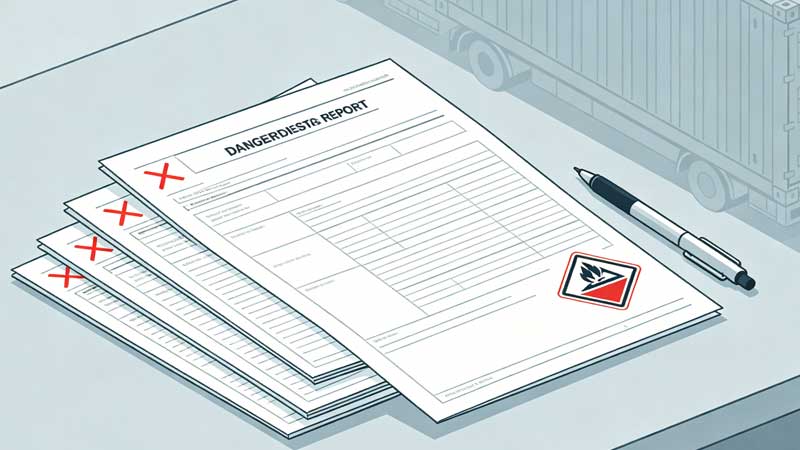
Dangerous Goods Transport Report (also called a transport condition identification report or 货物运输条件鉴定书) is a mandatory document required by Chinese carriers and customs for any product that may be classified as dangerous goods (DG) during transport. This includes chemicals, lithium batteries, magnetized materials, compressed gases, and many industrial substances. The report identifies the correct UN number, hazard class, packaging group, and special handling requirements in accordance with the UN Model Regulations and Chinese standards such as GB 6944. Without a valid transport report, airlines and shipping lines will refuse to accept your cargo.
Our Dangerous Goods Transport Report service guides foreign manufacturers through the entire China DG compliance journey. We coordinate classification testing at CNAS-accredited laboratories, prepare the full transport documentation package, and deliver the report promptly. With our support, you can navigate the dangerous goods shipping documentation requirements without a local office.
Products That Require a Dangerous Goods Transport Report
Any product that meets the criteria for dangerous goods classification under Chinese or international regulations must have a transport condition identification report. Common examples include:
- Chemicals & Solvents: paints, coatings, adhesives, cleaning agents, industrial solvents — tested for flash point and corrosivity
- Lithium Batteries: lithium ion and lithium metal cells and batteries (may also need UN38.3 testing separately)
- Compressed & Liquefied Gases: aerosol cans, gas cylinders, fire extinguishers, camping gas cartridges
- Flammable Solids & Oxidizers: matches, metal powders, certain fertilizers, oxygen generators
- Magnetized Materials: large magnets and magnetic assemblies that can interfere with aircraft navigation
If you are unsure whether your product is classified as dangerous goods, contact us with a sample or SDS for a free preliminary classification assessment.
Documents Required for a DG Transport Report
To initiate the dangerous goods transport report application, foreign manufacturers need to provide the following (we assist with translation and preparation):
- Product composition and physical property data (Safety Data Sheet / SDS preferred)
- Product sample for laboratory testing (quantity depends on test items)
- Manufacturer business license and quality management system certificate
- Existing international transport documentation (IATA DGR, IMDG Code, ADR, etc.) for reference
- Application form completed by our team
- Letter of authorization for TEK China to act as the applicant representative
Dangerous Goods Transport Report Timeline & Cost
The typical DG transport report process takes 2 to 4 weeks from sample submission to report issuance, depending on the test items required and the lab's current queue. Straight-forward classifications may be completed within 2 weeks.
Cost factors include the number of test parameters, whether the product is a pure substance or mixture, and the complexity of packaging recommendations. We provide a fixed-price proposal after evaluating your product — no hidden costs.
📋 Get your personalized DG Transport Report quote: Contact us with your product details and receive a detailed fee breakdown within 24 hours.